
Maintenance
What Causes Garage Door Spring To Break & How to Spot the Signs
September 17, 2026 · Prime Garage Doors
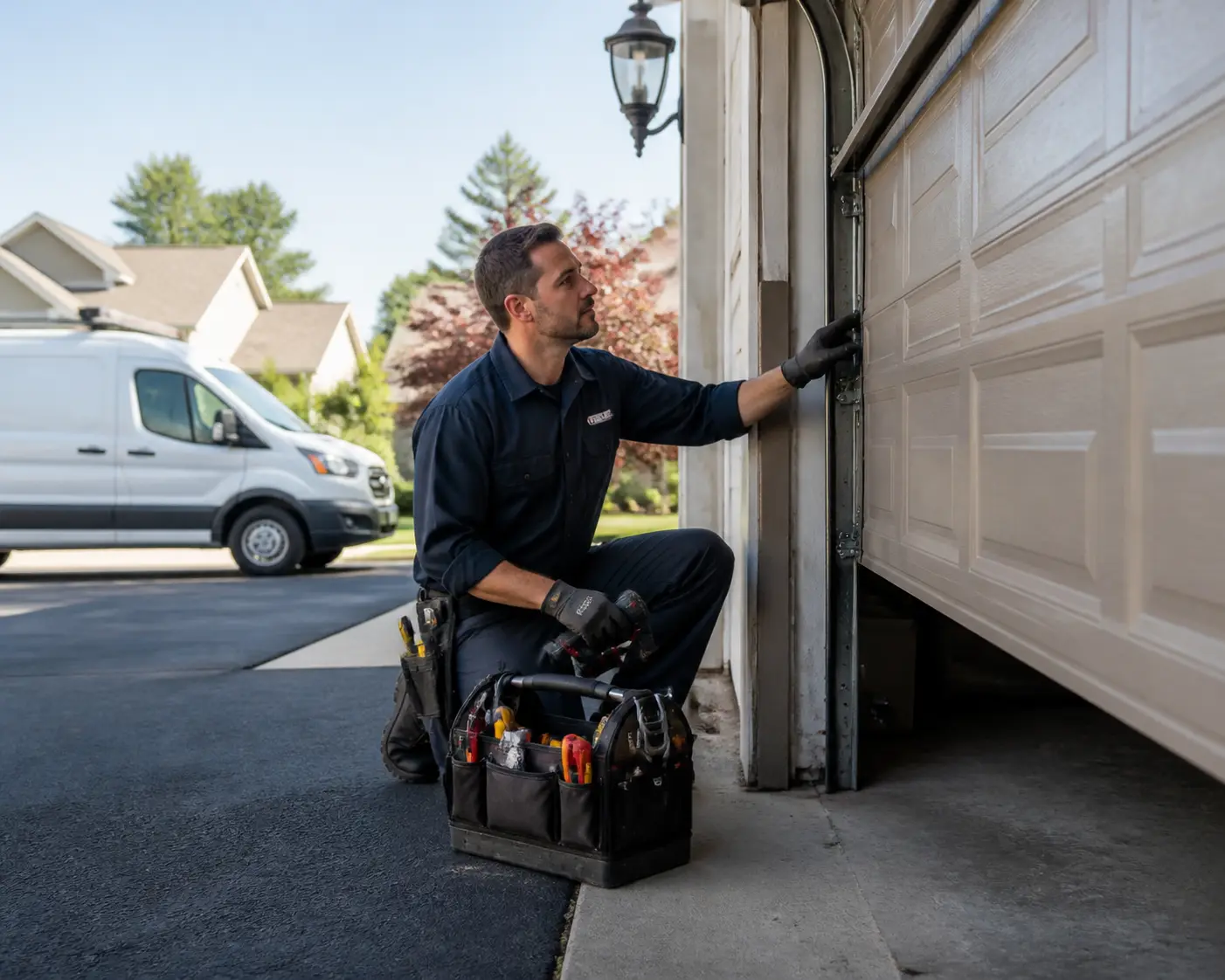
Wondering what causes a garage door spring to break? Learn the top reasons behind a broken garage door spring, how to safely identify the damage, and why professional repair is essential.
A broken garage door spring is one of the most common and disruptive mechanical failures a homeowner can experience. Garage door springs do the heavy mechanical lifting for your entire overhead system, counterbalancing hundreds of pounds of door weight so that an opener—or human hands—can lift the door effortlessly. When a spring snaps under tension, the door becomes far too heavy to lift safely, leaving your vehicle trapped inside and putting immense strain on your electric opener motor.
Understanding what causes garage door spring to break helps you spot warning signs early, arrange timely maintenance, and keep your household safe from high-tension hardware hazards. Knowing how to spot early signs of wear and when to bring in professionals to fix garage door problems prevents unexpected lockouts and avoids costly secondary damage to your door panels and electric opener. When you need expert help, Prime Garage Doors delivers fast support with experienced professionals, free estimates, and same-day service availability throughout Greater Boston.
Understanding Garage Door Springs: Torsion vs. Extension
Before examining why garage door springs break, it is helpful to understand the two main spring configurations used in residential overhead door systems. Both systems rely on high-tension steel coils to offset door weight, but they operate through different mechanical principles.
- Torsion Springs: Torsion springs sit horizontally on a heavy steel shaft directly above the top frame of the garage door header. When the door closes, cable drums attached to the shaft pull lift cables tight, twisting the torsion coils around the center shaft to store potential energy. When the door opens, the spring unwinds, transferring torque through the shaft to assist in pulling the door upward along the garage door track system. Torsion springs are the standard choice for modern multi-panel residential and commercial doors due to their smooth operation and durability.
- Extension Springs: Extension springs are installed on both sides of the door, running parallel to the upper horizontal sections of the garage door track system. Rather than twisting, extension springs stretch out longways as the door lowers, storing mechanical energy through linear tension. When the door opens, the stretched coils contract, pulling the lift cables over pulleys to lift the door sections upward.
Because both torsion and extension springs undergo repetitive mechanical expansion and twist every time the door moves, every cycle degrades the structural integrity of the steel coil. Over time, physical stress, atmospheric conditions, and wear cause these components to break.
Primary Causes: What Causes Garage Door Springs to Break?
Overhead garage door springs operate under constant kinetic pressure. Over thousands of cycles, physical degradation and environmental factors accumulate until the steel reaches its breaking point. The primary causes of spring failure include:
1. Cycle Fatigue and Cumulative Structural Wear
Every single opening and closing motion of your overhead door counts as one operational cycle. Standard residential torsion springs are manufactured and rated for roughly 10,000 cycles. For a typical family home where the garage door opens and closes four times per day (morning commutes, returning home, running errands, and evening parking), a 10,000-cycle spring lasts roughly seven to ten years.
Each time the spring flexes, microscopic stress fractures form within the steel grain. As cycles accumulate, these micro-fractures widen. Eventually, cycle fatigue reaches a critical limit, and the metal snaps abruptly during operation or while the door sits fully closed under high tension.
2. New England Temperature Extremes and Cold Snaps
Temperature fluctuations in Greater Boston, Cambridge, Newton, and surrounding areas significantly impact steel performance. Extreme cold causes metal coils to contract and become brittle. When a winter severe freeze hits, ambient garage temperatures drop rapidly.
If a spring is already approaching the end of its rated cycle lifespan, cold weather brittleness acts as the final catalyst. The sudden stress applied when the opener starts pulling an unassisted cold door is often enough to snap a cold, brittle spring instantly.
3. Surface Rust, Humidity, and Moisture Exposure
Garage environments expose overhead door hardware to elevated humidity, melted snow, rain runoff, and corrosive road salt brought in by vehicles during New England winters. Rust formation poses a major threat to steel spring health.
As surface rust develops between adjacent spring coils, it creates rough friction as the coils turn or stretch against each other. This coil-on-coil binding increases rotational resistance, adding structural drag and accelerating metal fatigue. A rusted spring often fails hundreds or thousands of cycles before reaching its design rating.
4. Lack of Proper Lubrication and Maintenance
Overhead springs require periodic lubrication to glide smoothly without binding or creating destructive coil friction. When garage door hardware is neglected, friction builds up rapidly, accelerating wear across the entire assembly.
Proper routine service includes applying non-tacky spray lubricant to moving bearings, rollers, and hinges. However, homeowners must observe a crucial rule: never apply oil or grease inside the garage door track system channels. Lubricating the inside of track channels causes rollers to slide instead of turn, collecting dust, salt, and debris that lead to door misalignment and binding.
5. Incorrect Spring Sizing or Imbalanced Overhead Doors
Garage door springs are calibrated specifically to match the exact weight, height, and hardware load of the door panels. If a replacement spring has an incorrect wire gauge, coil diameter, or overall length, the spring will either under-assist or over-stress the assembly.
Furthermore, when heavy insulation, decorative glass, or thick overlay panels are added to an existing door without recalibrating the springs, the added weight forces the spring to work far beyond its engineered mechanical limits, leading to early failure.
6. Binding Hardware and Misaligned Garage Door Track System
If secondary hardware—such as end bearing plates, rollers, or hinges—becomes worn or bent, the door will bind as it travels upward. If the garage door track system is misaligned or full of built-up grime, the door forces the spring system to pull against severe friction. This unnecessary drag puts uneven torque on torsion shafts and extension pulleys, causing premature spring breakage.
How to Spot the Signs of a Broken Garage Door Spring
Because garage door springs are located overhead, spotting signs of damage early allows you to arrange repairs before an emergency lockout occurs. Inspect your door setup visually from ground level and pay attention to these clear indicators of spring failure:
1. A Loud Explosive Bang from the Garage
When a torsion or extension spring breaks under tension, it releases all of its stored mechanical energy in a fraction of a second. This rapid energy release creates a loud, sharp bang that often sounds like a firecracker, gunshot, or dropping heavy equipment. If you hear a sudden impact sound coming from your attached garage, inspect the overhead springs right away.
2. A Visible Split or Gap in the Torsion Coil
Look directly above the top section of your garage door panel frame at the steel shaft. A healthy torsion spring appears as a continuous, tightly wound metal cylinder. When a spring breaks, the coil separates into two pieces, leaving a visible gap between the severed ends along the center shaft.
3. The Door Lifts Only a Few Inches Then Stalls
Automatic garage door openers feature internal electronic torque sensors designed to prevent motor damage and entrapment. Openers do not lift the entire weight of the door on their own; they simply guide and push a balanced door. When your garage door won't open fully or stalls after moving only a few inches, a broken spring is likely keeping the heavy door anchored down.
4. Loose, Dangling, or Misaligned Lift Cables
On torsion spring systems, spring tension keeps the stainless steel lift cables wrapped tight around the end cable drums. When the spring breaks and loses tension, the lift cables immediately slacken. You may see cables unwinding off the drums, hanging loosely beside the side jambs, or entangling around the garage door track system.
5. The Door Drops Fast or Feels Heavy
If an extension spring breaks while the door is elevated, or if one spring in a dual-torsion system breaks while the door is moving, the door will lose its mechanical counterweight. The door may drop rapidly while closing or feel impossibly heavy if you attempt to lift it manually. Never attempt to force an imbalanced door up manually, as unassisted door panel weight can cause serious bodily injury.
6. Top Panel Bending or Flexing
If an automatic opener motor attempts to pull a heavy door with a broken spring, the opener arm pushes hard against the top center panel bracket. Because the bottom of the door remains anchored by heavy unassisted door weight, the top section panel can bend, buckle, or crack under the force exerted by the motor gear.
The Dangers of High-Tension Hardware and Professional Repair
Garage door torsion springs, extension springs, lift cables, bottom corner brackets, and winding cones are held under dynamic kinetic tension. Attempting to disassemble, adjust, or replace overhead springs without specialized tools, winding bars, and technical expertise poses severe personal safety risks.
The U.S. Consumer Product Safety Commission (CPSC) warns that high-tension garage door mechanisms pose severe impact and entrapment risks to homeowners. Uncontrolled release of spring tension can cause winding tools to fly out of winding cones or cause heavy steel cables to snap backward, risking severe lacerations or crushing injuries.
If you identify a broken spring, keep these safety precautions in mind:
- Do not attempt to operate the automatic opener: Continuing to push the wall button can strip internal nylon drive gears, burn out the opener motor, or snap lift cables.
- Never loosen bottom corner brackets: The bottom brackets on your garage door panels are tied directly to the high-tension lift cables. Loosening these bolts while cables are taut can cause violent hardware release.
- Keep clear of dangling cables: Loose cables wrapped around drums or side brackets can whip under unexpected tension shifts.
- Leave spring replacement to experienced professionals: Trained technicians who perform professional garage door spring replacement use calibrated winding bars, vise grips, and weight-matched replacement springs to restore full system balance safely.
Regional Service Across Greater Boston and Beyond
Overhead door issues require quick, reliable service from technicians who understand regional weather challenges and structural requirements. Environmental conditions in New England—ranging from winter freeze-thaw cycles to damp coastal air—put constant stress on overhead mechanical parts.
Prime Garage Doors operates out of Watertown, MA, serving residential and commercial properties throughout the area. Whether you require prompt garage door repair boston service, detailed assistance for garage door repair framingham ma, or reliable repairs across Cambridge, Somerville, Newton, Quincy, Brookline, Medford, Malden, Waltham, Arlington, Belmont, Dedham, and Needham, our technicians come prepared to solve your door issues efficiently.
Even for property owners seeking regional technical guides such as saratoga springs garage door repair information, recognizing high-tension spring hazards and adhering to professional service standards is critical for long-term overhead door safety and reliability.
Summary
Garage door springs break primarily due to cumulative cycle fatigue, extreme winter temperatures, surface rust, and lack of lubrication on moving bearings and hinges. Recognizing visual indicators like split torsion coils, dangling lift cables, or an opener motor stalling after lifting a door a few inches enables you to stop using the system before secondary motor or panel damage occurs. Because spring assemblies hold immense kinetic energy, replacement should always be handled by experienced professionals equipped with proper winding tools.
- Standard residential springs last roughly 10,000 cycles before metal fatigue leads to sudden failure.
- New England moisture, salt, and temperature drops accelerate rust and make spring coils brittle.
- Always lubricate moving bearings, rollers, and hinges—never lubricate the inside of the garage door track system channels.
- High-tension components like springs, cables, and bottom brackets pose severe safety risks and require professional service.
If your garage door spring has broken or your door is stuck closed, do not risk property damage or personal injury. Contact Prime Garage Doors today to Request a Free Estimate or Schedule Service by calling our team at (844) 321-0914 to speak with experienced professionals about same-day service availability across Greater Boston.
Frequently asked
- What primary factors cause a garage door spring to break?
- Garage door springs usually break due to normal wear and tear over thousands of usage cycles, metal fatigue, and rust buildup caused by local moisture and salt. Lack of routine maintenance on moving bearings, hinges, and rollers also increases friction and accelerates spring failure. Leaving high-tension spring replacement to experienced professionals ensures your system is serviced safely.
- How can I tell if my garage door spring is already broken?
- Common signs of a broken spring include a sudden loud bang from the garage, a visible gap split across the overhead spring coil, and slack or loose lift cables. You may also notice the automatic opener lifting the door only a few inches before stopping due to the unassisted weight of the door.
- Is it safe to open a garage door with a broken spring?
- No, operating a garage door with a broken spring is extremely dangerous because the heavy door is no longer counterbalanced. Forcing the door open manually or using the automatic opener can burn out the motor gears or cause the door to fall from the garage door track system. High-tension components pose severe impact risks, so you should always contact experienced technicians for assistance.
- How should garage door components be properly lubricated to prevent spring wear?
- Proper maintenance involves applying appropriate lubricant to moving bearings, rollers, and hinges to keep hardware operating smoothly and reduce coil friction. Never apply lubricant to the inside of the garage door track system channels, as this can collect dirt and cause rollers to slip. Routine servicing by experienced professionals helps maximize the operational lifespan of your springs.
- What should I do immediately after a garage door spring breaks?
- If a spring snaps, immediately stop trying to operate the door to prevent severe injury and further hardware damage. Keep clear of the overhead high-tension hardware, keep family members away from the garage, and Call Now or Request a Free Estimate from Prime Garage Doors for same-day professional assistance.