
Maintenance
How-to guideHow to Fix Garage Door Problems Safely | Troubleshooting Guide
August 27, 2026 · Prime Garage Doors
Is your garage door stuck, noisy, or refusing to close? Learn how to fix garage door issues safely, what troubleshooting steps you can take, and when to call a professional.
Learning how to fix garage door problems safely starts with identifying whether the issue is a simple mechanical obstruction, an electrical sensor misalignment, or a high-tension component failure. Safe troubleshooting involves testing basic inputs like remote batteries and safety eyes, inspecting track alignment, and avoiding high-risk parts like torsion springs and lifting cables. For safe, effective solutions on complex issues, homeowners can rely on professional garage door repair boston technicians to diagnose and restore proper door operation.
Understanding Garage Door Operation and Common Failure Points
A standard overhead garage door relies on a delicate balance between mechanical hardware, motorized force, and high-tension counterweight systems. When you push your wall button or remote control, an electric motor initiates movement, while heavy-duty springs counter the weight of the door panels—often weighing between 150 and 300 pounds. When any single component fails or loses alignment, the entire opening system can stop operating correctly or freeze mid-travel.
In Greater Boston communities such as Cambridge, Somerville, Newton, and Watertown, severe New England weather patterns frequently accelerate hardware wear. Cold snaps during winter freeze lubricants, causing metal hinges and rollers to bind. Road salt brought in on vehicles can corrode bottom brackets and track bases. Meanwhile, summer humidity can cause wood or under-insulated steel doors to expand slightly, placing additional strain on track tolerances.
Common root causes for garage door malfunctions include:
Safety Sensor Misalignment: Photo-electric eyes near the floor become bumped, dirty, or disconnected, preventing the opener from closing the door.
Lack of Maintenance Lubrication: Dry hinges, rollers, and bearing plates create high friction, causing noisy travel or forcing the opener's safety force limits to trip.
Hardware Vibration: Daily operation creates mechanical vibration that gradually loosens track bolts, hinge screws, and opener mounting brackets.
Spring Fatigue: Springs have a finite lifecycle (typically measured in opening cycles). When a spring fails, understanding garage door spring repair safety is critical, as the opener loses its counterweight support and cannot lift the heavy door safely.
Obstructions in Tracks: Dirt accumulation, small stones, or bent metal tracks physically block rollers from completing their path.
Signs to Watch For, Safety Rules, and Essential Tools
Before attempting any basic visual inspection or minor maintenance to fix garage door issues, you must prioritize personal safety. Overhead garage doors operate under extreme mechanical tension. Attempting to repair tension-loaded parts without proper training and heavy-duty specialty tools can lead to sudden structural failure or severe injury.
Critical Safety Rules
Always follow these basic precautions when troubleshooting your overhead door system:
Never touch torsion or extension springs: Springs store immense mechanical energy. Never attempt to adjust, wind, unwind, or unbolt spring assemblies, center bearing plates, or bottom corner brackets.
Disconnect power before mechanical work: Unplug the opener cord from the ceiling outlet before placing hands near tracks, hinges, or chain/belt drives.
Keep hands clear of section joints: Panel seams can pinch fingers when the door moves. Always use designated lift handles when moving a door manually.
Do not pull the emergency release cord on an open door: If a spring is broken, pulling the emergency disconnect on a raised door can cause it to crash down violently.
Recommended Tools for Minor Maintenance
For safe DIY troubleshooting and basic maintenance, gather these non-specialized household tools:
Non-tacky silicone or lithium garage door spray lubricant (avoid standard multi-purpose penetrants like WD-40, which attract dust)
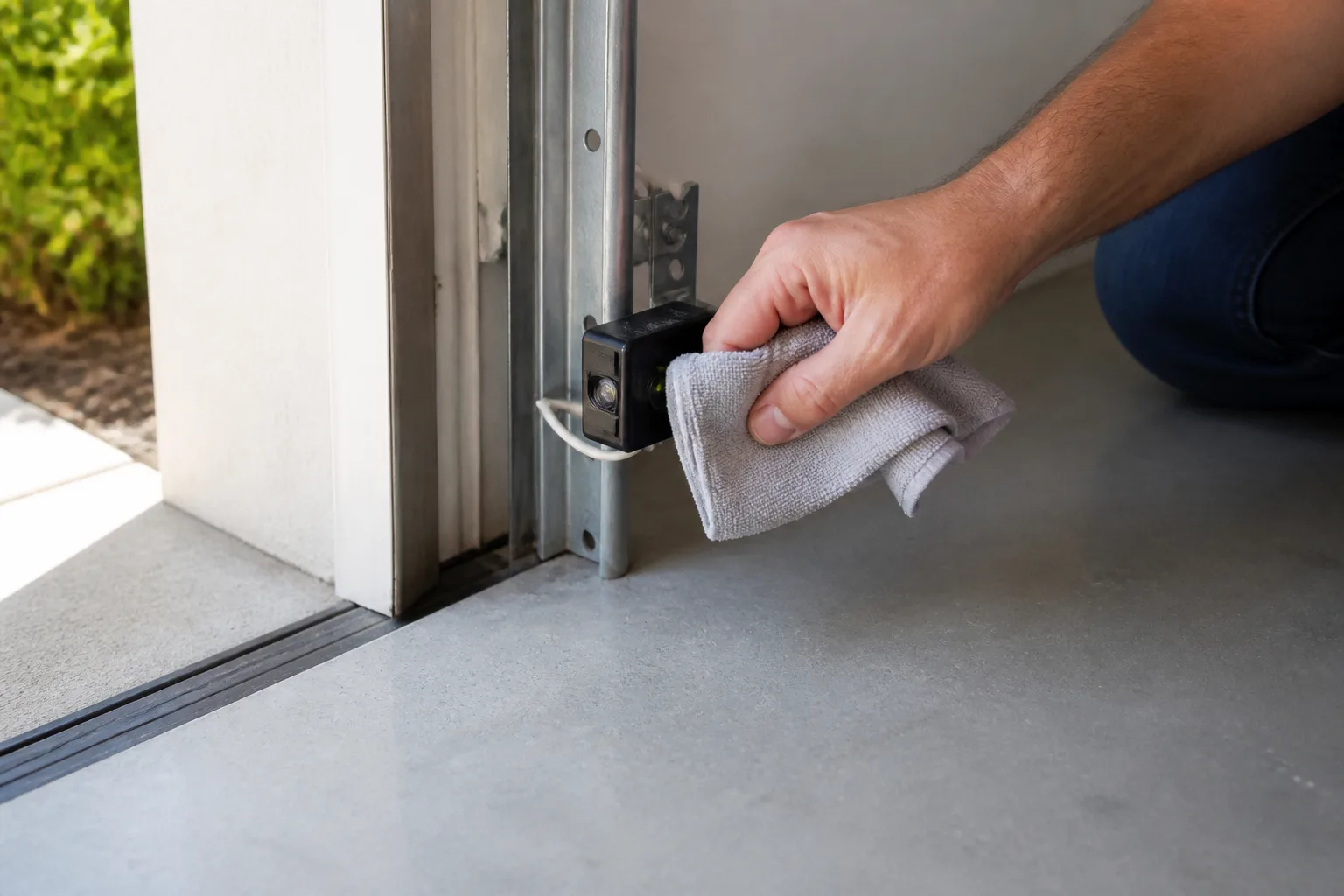
Microfiber cloth and warm water for wiping sensor lenses
Bubble level to check track alignment
Standard socket set and screwdriver set to tighten loose external hardware
Stepladder to access the overhead opener motor unit safely
Step-by-Step Guide to Safely Fix Garage Door Issues
Follow these sequential steps to safely isolate, clean, and address common minor garage door problems without exposing yourself to dangerous spring or cable tension.
Step 1: Isolate the Power and Secure the Work Area
Begin all basic visual checks and surface cleaning with the garage door in the fully closed position. Unplug the garage door opener power cord from the ceiling outlet. If your unit is hardwired, switch off the corresponding circuit breaker in your home's electrical panel. Ensure family members know the garage door is temporarily out of service so no one attempts to operate it via remote or smart home application while you are working.
Step 2: Inspect and Clean Safety Reversal Sensors
If your garage door opens normally but refuses to close—or starts closing and immediately reverses while the opener lights flash—the safety photo-eyes are usually responsible. Locate the two small sensors mounted on either side of the door opening, about six inches above the floor. Use a soft, dry microfiber cloth to clean dirt, cobwebs, or salt film off the glass lenses. Ensure the small LED indicator lights on both sensors are glowing steadily. If one light is dim or flickering, gently turn the sensor bracket by hand until the lenses face each other directly and the light stays solid.
Step 3: Clear and Inspect the Roller Tracks
Inspect the vertical and horizontal steel tracks running along the sides of your garage opening. Look for small debris, dried grease buildup, leaves, or stones stuck inside the channel. Take a damp rag and wipe the interior path of both tracks clean. Inspect the tracks visually to see if they are straight. Use a bubble level against the vertical tracks to confirm they are plumb. If you notice a loose track bracket securing the metal track to the wood frame, use a socket wrench to snug the mounting lag screw back down firmly. Do not attempt to hammer or force severely bent metal tracks back into place manually.
Step 4: Tighten Loose Hinges and Roller Brackets
Over time, the normal vibration of an automatic opener can cause structural hardware on the inside of the door panels to back out. Take your socket set or screwdriver and systematically check the screws on every hinge joining the door sections together. Tighten any loose screws until they sit flush against the metal hinge plates. Inspect the roller stems sliding into the hinges; replace any missing fastners on standard hinge leaves. Never loosen or remove screws located on the bottom corner brackets where the steel lifting cables attach.
Step 5: Apply Proper Lubrication to Moving Parts
Friction causes unwanted grinding noises and strains your motor assembly. Spray a targeted garage door lubricant directly onto the steel roller bearings, hinge pivot points, end bearing plates, and the inner coils of your spring assembly. Spraying the spring coils reduces friction between winding coils during operation. Wipe away any excess fluid with a clean rag to prevent dripping onto parked vehicles or the garage floor. Never apply grease or lubricant directly inside the track channels, as this causes rollers to slide and skid rather than roll smoothly.
Step 6: Restore Power and Perform Safety Reversal Tests
Plug the opener back into the ceiling electrical outlet. Stand clear of all moving parts and test the door operation using the wall control button. If the door moves smoothly, test the automatic safety reversal system. Federal guidance from the U.S. Consumer Product Safety Commission emphasizes that safety mechanisms must be verified regularly. Place a straight piece of 2x4 wood flat on the ground directly beneath the center path of the closing door. Press your wall button to close the door. When the bottom edge contacts the wood block, the opener must automatically stop and reverse direction within two seconds. If the door strikes the block and continues pushing down, consult your opener manual to adjust the down-limit and force settings, or contact a professional for adjustment.
After the Job: Routine Maintenance for Greater Boston Homeowners
Once you have resolved minor glitches like dirty sensors or dry hinges, keeping your door operating smoothly requires regular inspection. New England weather places unique demands on home exteriors, making a simple bi-annual maintenance routine essential for every homeowner in Medford, Brookline, Waltham, and nearby towns.
Every spring and autumn, spend ten minutes conducting these preventative checks:
Perform a Visual Sweep: Inspect cables for fraying or rusting strands near the bottom brackets. Check your rubber weatherstripping seal at the bottom of the door panel to ensure cold drafts and water stay outside.
Listen to the Door Cycle: Stand inside the garage while the door operates. Note any sudden pops, grinding sounds, or high-pitched squeaks. Early noise identification lets you address dry bearings before total mechanical failure occurs.
Check Balance (Professional Assist Suggested): An unbalanced door places heavy stress on motor gears. Testing balance requires disconnecting the opener and manually lifting the door to mid-travel. If it slides down or shoots up on its own, spring tension requires adjustment by an experienced professional.
When to Call a Professional Garage Door Service
While clearing dirty photo-eyes, tightening hinge screws, and spraying lubricant are safe DIY tasks, many complex garage door repairs require trained service technicians equipped with specialized winding bars and professional lifting tools. Attempting high-tension repairs yourself exposes you to severe safety risks.
Always contact a professional technician immediately if you encounter any of the following situations:
Broken Torsion or Extension Springs: If you hear a loud bang from the garage and see a visible gap in the coils of the spring above the door header, do not attempt to operate the door.
Frayed or Snapped Cables: Steel cables lifting the door carry high tension. Loose, off-spool, or unraveling cables require immediate expert repair.
Off-Track or Crooked Doors: If rollers have popped out of the tracks or the door rests unevenly in the frame, trying to force it open or shut can buckle the door panels completely.
Grinding Opener Gears: When an opener motor hums loudly but the drive chain or belt fails to move, internal plastic drive gears may be stripped, requiring motor head disassembly.
If your overhead door is stuck, damaged, noisy, or completely uncooperative, do not put your personal safety at risk. When urgent issues arise, getting right away garage door solutions protects your property. The team at Prime Garage Doors offers experienced garage door professionals, 24/7 phone support, and same-day service availability across Greater Boston. Schedule Service with our team today to get your system back in working order safely.
Key Takeaways for Safe Garage Door Troubleshooting
Fixing garage door issues safely means knowing the boundary between light household maintenance and high-tension structural repairs. Simple fixes like aligning safety eye sensors, wiping tracks clear, tightening hinge hardware, and applying silicone lubricant solve many daily operational glitches. However, any issue involving cables, tracks, spring assemblies, or door balance demands expert attention to keep your home and family safe.
Inspect and clean photo-eye sensors regularly to solve sudden door closing failures.
Lubricate metal rollers, hinges, and spring coils bi-annually with specialized garage door spray.
Never loosen, adjust, or touch bottom brackets, lifting cables, or torsion springs.
Test your door's automatic safety reversal mechanism regularly using a wood block.
Rely on qualified technicians for high-tension hardware repairs and emergency service.
When you need reliable, fast help with a stubborn overhead door, turn to Prime Garage Doors. We provide free estimates, 24/7 phone support at (844) 321-0914, and same-day service available throughout Boston, Cambridge, Newton, Somerville, Watertown, and surrounding communities. Call Now or Request a Free Estimate to get your garage door running smoothly today.
Frequently asked
- Can I safely fix a broken garage door spring myself?
- No, you should never attempt to adjust or replace garage door springs on your own. Springs are under extreme mechanical tension and can cause severe injury if handled without specialized tools and professional training. If you notice a broken spring or hear a loud pop, keep the door closed and Request a Free Estimate from the experienced professionals at Prime Garage Doors.
- Why does my garage door open fine but refuse to close?
- This issue is most commonly caused by misaligned, dirty, or obstructed photo-electric safety sensors located near the bottom of the door frame. Gently wiping the lenses with a microfiber cloth and aligning the brackets so both indicator lights glow steadily usually resolves the problem. If cleaning and realigning the sensors does not restore operation, contact our 24/7 phone support team for immediate assistance.
- What kind of lubricant should I use on my garage door components?
- Use a non-tacky silicone or lithium spray lubricant designed specifically for garage doors, applying it to hinges, roller bearings, and spring coils. Avoid using multi-purpose penetrating oils like WD-40, which attract dust and grime, and never spray lubricant directly inside the track channels. Regular lubrication twice a year helps protect hardware against harsh Greater Boston weather and temperature swings.
- What should I do if my garage door comes off its track?
- If your garage door is sitting crooked or a roller has popped out of the track, stop using the opener immediately and unplug the power unit. Trying to force an off-track door to move can permanently damage the panels and create a dangerous falling risk. Call Now to reach Prime Garage Doors for same-day service availability to realign your door safely.
- How do I get professional garage door repair help in Greater Boston?
- Prime Garage Doors serves homeowners and commercial property owners across Greater Boston, including Boston, Cambridge, Newton, and surrounding communities. We offer free estimates, 24/7 phone support at (844) 321-0914, and same-day service available for urgent overhead door issues. Call Now or Request a Free Estimate to schedule a visit from an experienced technician.