Maintenance
How-to guideGarage Door Won't Open: Troubleshooting Tips and Professional Repairs
August 28, 2026 · Prime Garage Doors
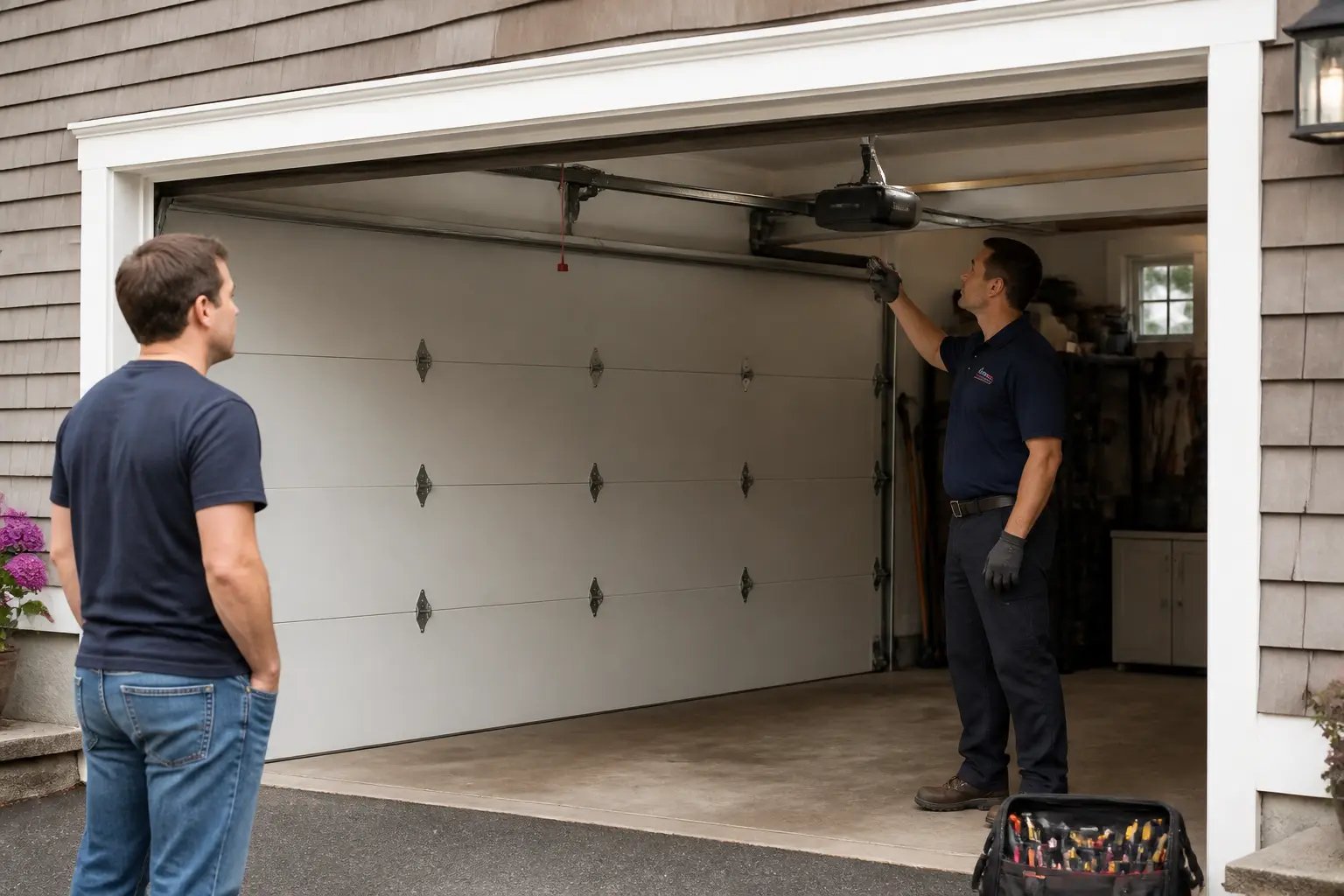
When your garage door won't open, the cause may be a dead remote battery, blocked safety sensors, a damaged opener, or a broken spring. This guide explains what homeowners can safely check and when professional garage door service is needed.
How to Fix a Garage Door That Won't Open: Safe Troubleshooting Guide
When a garage door won't open, the cause may be a power interruption, remote-control problem, blocked safety sensors, an engaged manual lock, or a mechanical failure. Homeowners can safely perform basic visual and electrical checks, but broken springs, damaged cables, bent tracks, and other high-tension components require professional garage door service.
Why a Garage Door Won't Open
An automatic garage door depends on several electrical and mechanical components working together. A problem with the opener, remote, safety sensors, door hardware, or power supply can prevent the door from opening.
Common causes include:
Loss of electrical power: A tripped breaker, GFCI outlet, or disconnected opener can prevent the motor from operating.
Remote-control problems: A weak or dead battery can prevent the opener from receiving the signal.
Blocked safety sensors: Dirt, cobwebs, or misaligned photo-eye sensors can prevent normal operation.
Engaged manual lock: An interior slide lock can physically prevent the door from moving.
Frozen weather seal: Ice or snow can temporarily bond the bottom seal to the garage floor during winter.
Broken springs or cables: A failed spring or lift cable can prevent the opener from safely lifting the door.
Opener failure: Worn gears, electrical components, or other opener problems can stop the system from responding.
What to Check When Your Garage Door Won't Open
Before contacting a technician, homeowners can perform several basic checks without touching high-tension garage door components.
Check the Garage Door Opener Power
Look at the opener motor unit mounted to the garage ceiling. Check whether its lights or indicator LEDs are operating.
If the opener appears completely inactive:
Check whether the opener is connected to its electrical outlet.
Check the home's electrical panel for a tripped garage-related breaker.
If the opener is connected to a GFCI-protected outlet, check whether the outlet needs to be reset.
If the electrical supply continues to trip, stop troubleshooting and contact a qualified professional.
Do not attempt to modify electrical wiring or repair the opener's internal electrical components yourself.
Check the Remote Control Battery
If the wall-mounted control operates the door but the handheld remote does not, the remote battery may be depleted.
Replace the battery with the correct type for your remote and test the transmitter again. If the remote still does not operate the opener, the issue may involve the remote, receiver, or opener programming.
Check the Wall Control Lock Feature
Some garage door wall controls include a Lock or Vacation feature that temporarily disables remote transmitters.
Look at the wall control for a lock indicator or button. If the lock feature is active, follow the manufacturer's instructions to disable it and then test the door again.
Clean the Safety Sensors
Photo-eye safety sensors are installed near the bottom of the garage door opening. They communicate across the doorway and help prevent the door from closing when an obstruction is detected.
Perform only basic visual maintenance:
Remove dust, dirt, or cobwebs from the sensor lenses.
Make sure nothing is blocking the space between the sensors.
Check that the sensor indicator lights appear normal and steady.
Look for visibly loose or damaged sensor brackets.
Do not modify damaged wiring or attempt electrical repairs. If the sensors remain faulty after basic cleaning, professional diagnosis may be necessary.
Look for a Manual Door Lock
Check the inside edges of the garage door for a manual slide lock. If the lock has been engaged, it can prevent the opener from moving the door.
Disengage the lock only if it can be done normally without forcing the hardware. Never force a jammed lock or door.
Check for Ice, Snow, or Debris
During Massachusetts and New England winters, snow, ice, and road debris can accumulate around the bottom of the garage door.
Visually inspect the area beneath and around the door. Remove loose snow or debris that is safely accessible without forcing the door or its hardware.
If the door appears frozen to the ground, do not repeatedly activate the opener. Excessive force can damage the door or opener components.
When a Garage Door Won't Open Because of a Mechanical Failure
Some problems cannot be safely resolved through homeowner troubleshooting.
Broken Garage Door Springs
A broken torsion or extension spring can make the door extremely difficult or impossible for the opener to lift. You may notice a visible separation in a torsion spring or hear a loud bang before the door stops operating.
Garage door springs store significant mechanical energy. Never attempt to unwind, adjust, remove, or replace a garage door spring yourself. The U.S. Consumer Product Safety Commission provides safety information concerning garage door systems and their components.
For suspected spring damage, professional garage door spring repair is the safest option.
Damaged or Frayed Lift Cables
Lift cables work with the spring system to raise and lower the door. A loose, frayed, or disconnected cable can cause the door to become uneven or jammed.
Do not attempt to reconnect or tension a damaged cable. Cable and spring systems should be inspected and repaired by experienced garage door professionals.
Off-Track Garage Door
A garage door that has moved out of its [garage door track system] may become crooked, jammed, or partially open.
Do not force an off-track door with the automatic opener. Contact a professional to inspect the rollers, tracks, cables, brackets, and door sections.
Garage Door Opener Failure
If the door hardware appears normal but the opener motor does not respond, the problem may involve the motor, drive system, circuit board, wall control, safety sensors, or remote receiver.
Professional garage door opener repair can identify whether the existing opener can be repaired or should be replaced.
Safe Maintenance After the Problem Is Resolved
Regular basic maintenance can reduce the likelihood of future operating problems.
Keep photo-eye sensor lenses clean.
Remove dirt and debris from around the garage door opening.
Inspect weatherstripping for visible damage or deterioration.
Check rollers, hinges, and other moving hardware for visible wear.
Lubricate only moving rollers, bearings, and hinges with an appropriate garage door lubricant.
Never apply grease or lubricant inside the garage door track channels.
Have springs, cables, drums, and other high-tension components inspected by qualified professionals.
When to Call a Garage Door Professional
Contact an experienced technician if your garage door won't open and basic visual and electrical checks do not identify the problem.
Professional service is especially important when you see:
A broken or separated garage door spring
Frayed, loose, or disconnected lift cables
A door that is visibly off track
Bent or damaged track sections
A door that is severely crooked
An opener that hums without operating the door
Repeated electrical or sensor failures
Structural damage to the door or supporting hardware
Prime Garage Doors provides garage door repair throughout Greater Boston and surrounding communities. Our experienced professionals can diagnose opener problems, spring failures, cable issues, track damage, and other garage door problems.
For urgent situations, same day garage door repair near me can help homeowners address a door that is stuck, damaged, or preventing vehicle access.
Summary
When a garage door won't open, start with safe checks such as electrical power, remote batteries, wall-control settings, safety sensors, manual locks, and visible obstructions. Avoid forcing the door or working on springs, cables, tracks, or other high-tension components.
Check the opener's power supply and electrical controls.
Replace a weak remote battery when necessary.
Check the wall control's Lock or Vacation setting.
Clean and visually inspect the safety sensors.
Look for visible ice, snow, debris, or an engaged manual lock.
Never attempt to repair or adjust high-tension springs and cables yourself.
Contact an experienced professional when the problem involves mechanical or structural components.
If basic troubleshooting does not resolve the problem, Request a Free Estimate from Prime Garage Doors or call (844) 321-0914 for professional assistance.
Frequently asked
- Why is my garage door motor running, but the door won't open?
- If the opener motor hums or runs without lifting the door, the emergency release cord may have been pulled, or internal drive gears could be worn down. This issue can also occur when a broken spring prevents the door from moving under motor power. If re-engaging the carriage does not resolve the problem, contact an experienced professional to inspect the opener and mechanical hardware safely.
- What should I do if my garage door won't open due to a broken spring?
- Do not attempt to operate the automatic opener or manually force the door open when a spring is broken. Garage door springs store high tension, making self-repair or forced operation extremely hazardous. Contact Prime Garage Doors at (844) 321-0914 to speak with experienced professionals who can safely replace broken springs.
- Can cold New England weather prevent my garage door from opening?
- Yes, freezing temperatures and winter weather across Greater Boston can cause the rubber bottom seal to freeze directly to the concrete floor. Accumulated snow, slush, or ice along the track system can also prevent the door from moving freely. Avoid repeatedly activating the opener if the door is frozen down, as excessive strain can damage the motor or door panels.
- How do I determine if the problem is my remote control or the opener motor?
- Try operating the door using the wall-mounted control button inside your garage. If the wall switch opens the door but the remote does not, replace the remote battery and verify that the wall control lock feature is turned off. If neither the remote nor the wall button operates the system, check the opener's power outlet and circuit breaker.
- Can Prime Garage Doors help if my car is trapped inside the garage?
- Yes, same-day service is available across Greater Boston to help resolve urgent situations where a stuck door prevents vehicle access. We offer 24/7 phone support at (844) 321-0914 and free estimates before any work begins. Call Now or Request a Free Estimate to have an experienced technician assist you.