
Garage Door Repair
How to Fix a Garage door opener not working ?
September 17, 2026 · Prime Garage Doors
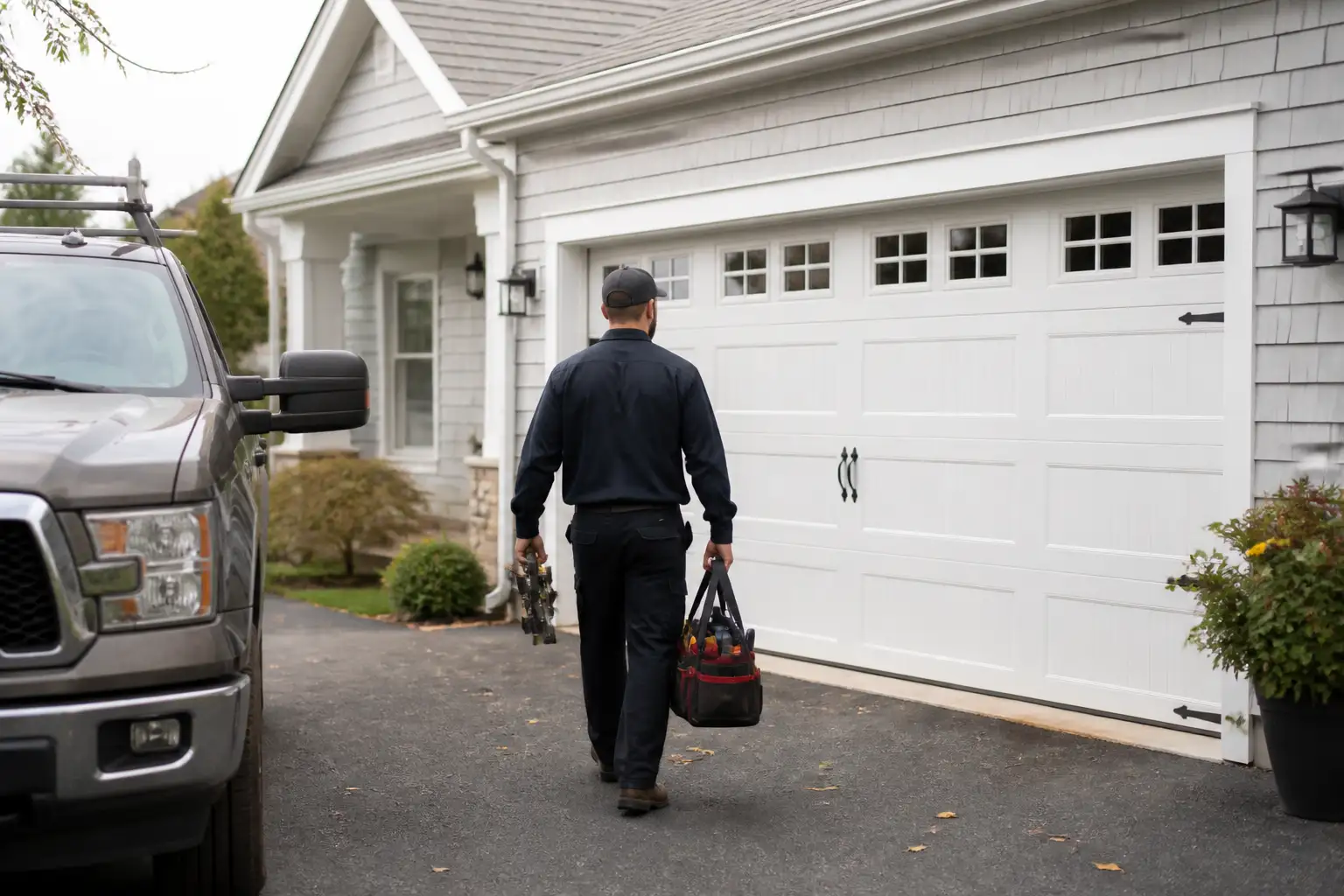
Is your automatic garage door opener not working, or does the motor hum without moving the door? Discover what to do when your garage door opener does not work, learn easy troubleshooting steps to fix electric garage door issues safely, and find out when it is time to call a professional for a reliable automatic garage door fix.
How to Fix a Garage Door Opener That Is Not Working
A garage door opener not working usually stems from electrical power loss, tripped GFCI outlets, misaligned photo-eye safety sensors, drained remote control batteries, or worn internal drive gears. Basic troubleshooting involves verifying power at the ceiling outlet, cleaning photo-eye lenses, clearing debris near the door threshold, and reprogramming wireless transmitters. When you need to fix a broken garage door or opener system safely, systematic diagnostics will help identify whether the solution requires simple adjustments or professional service.
If your opener motor runs continuously without moving the door or emits a loud hum, high-tension hardware or internal gear failure may be responsible. Operating an automatic opener under these conditions can cause severe motor damage. Experienced professionals from Prime Garage Doors offer diagnostic evaluation, garage door opener repair, free estimates, and same-day service availability across Greater Boston, including Cambridge, Somerville, Newton, and Watertown.
Why Your Automatic Garage Door Opener Stops Responding
An automatic garage door system relies on an unbroken sequence of electrical signals and mechanical movements. When pressing your wall console or remote control produces zero response and your garage door won't open—showing no light flashes, motor sounds, or movement—the command cycle has been interrupted. Understanding common causes helps clarify the correct fix.
1. Total Loss of Electrical Power
Residential garage door openers require consistent electrical current to power logic boards, radio receivers, and drive motors. Sudden power spikes, blown fuses, or tripped circuit breakers instantly deactivate the unit. Overhead garage door openers are frequently connected to Ground Fault Circuit Interrupter (GFCI) outlets. If another outlet or appliance on that circuit trips, power to the motor unit cuts off completely.
2. Activated Lockout or Vacation Mode
Many wall control stations feature a manual switch or button labeled "Lock" or "Vacation Mode." When activated, this security feature instructs the logic board to ignore incoming radio signals from wireless remotes and keypads. Homeowners often trigger this mode inadvertently. If wireless remotes fail while the wall control panel light remains illuminated, check the lock switch on the wall console.
3. Dead Batteries or Signal Disruption
Handheld remote controls transmit radio frequency signals to the opener antenna. Over time, internal batteries lose charge, leading to weak or intermittent transmission. Cold New England winters can accelerate battery drain. Severe power surges can also cause the opener receiver to clear stored memory, requiring you to re-pair the remote control.
4. Regional Service Assistance
Whether you require local assistance for garage door repair newton ma, suburban support for garage door repair framingham ma, or specialized service for saratoga springs garage door repair, addressing electrical and mechanical issues promptly prevents further wear on your system.
Troubleshooting the Power Source and Safety Sensors
Before assuming the motor assembly has failed, evaluate the main electrical connections and photo-eye safety sensors. These steps resolve many common opener issues quickly.
Step 1: Inspect the Power Supply and Circuit Breakers
Confirm that the power cord from the overhead unit is plugged securely into the ceiling receptacle. If the unit remains unpowered:
- Inspect your home electrical panel for a tripped breaker assigned to the garage circuit.
- Locate nearby GFCI outlets in the garage or adjoining utility spaces and press the reset button.
- Plug a standard lamp into the ceiling outlet to verify active electrical flow.
Step 2: Clean and Align the Photo-Eye Safety Sensors
Safety regulations require automatic garage door openers to feature infrared safety sensors mounted on both sides of the door opening near floor level. If these photo-eyes are misaligned, dirty, or obstructed, the logic board will prevent the door from closing and usually flashes the motor light bulbs rapidly.
- Clear Obstructive Objects: Remove cobwebs, storage boxes, leaves, or equipment sitting near the bottom of the door frame.
- Clean the Sensor Lenses: Wipe dust, dirt, or salt film off both sensor glass lenses using a clean microfiber cloth.
- Verify the LED Indicator Lights: Each photo-eye features an indicator LED. The sending sensor glows steadily when powered, while the receiving sensor glows steadily only when aligned directly with the optical beam. If the receiving LED flickers or stays off, gently adjust the mounting bracket until the light remains solid.
Step 3: Check Sensor Wiring and Terminals
Low-voltage wiring connects safety sensors to the terminal block on the motor housing. Check these thin wires for visible damage, severe kinks, loose connections, or corrosion near floor level. Make sure wire leads are connected securely to the terminal screws on the back of the motor head.
How to Fix a Garage Door Opener Motor That Hums But Won't Move
A distinct humming sound coming from the motor housing without door movement indicates that the logic board is delivering power, but mechanical obstruction or internal component failure is preventing shaft rotation.
1. Failed Motor Start Capacitor
Alternating current (AC) garage door motors rely on a start capacitor to supply an initial burst of electric torque. When a capacitor fails, the motor attempts to draw power but cannot create enough rotational force to turn the drive shaft. This produces a steady hum that stops after a few seconds when the internal thermal protector shuts down the motor to prevent overheating.
2. Worn or Stripped Internal Drive Gears
Chain-drive and belt-drive openers use internal drive gears made of hard plastic to transfer energy from the motor to the drive sprocket. Continuous operation over many years wears down these gear teeth. Heavy resistance or freezing conditions can strip the gear teeth completely. When this happens, the motor spins with a high-pitched whirring sound, but the drive belt or chain remains stationary.
3. Rail and Trolley Obstructions
Inspect the overhead metal rail connecting the powerhead to the front wall header. Hardened grease, foreign objects, or misaligned trolley stop components can jam the carriage, preventing the motor shaft from rotating properly.
Programming and Resetting Wireless Remote Controls
If your garage door opens using the hardwired wall button but fails to respond to wireless remotes, reprogramming the transmitters often restores communication.
Programming Standard Remote Controls
Most residential openers feature a designated Learn button on the rear or side panel of the motor housing. The button color corresponds to the radio frequency used by the opener system.
- Locate the Learn Button: Access the opener motor head safely. Remove the light lens cover to find the colored Learn button and adjacent indicator light.
- Activate Programming Mode: Press and immediately release the Learn button. The indicator light will illuminate steadily for roughly 30 seconds. Avoid holding the button down continuously, as holding it clears all paired devices from the unit memory.
- Pair the Transmitter: Within 30 seconds, press and hold the desired button on your handheld device, such as an 893max LiftMaster 3-button remote.
- Confirm Successful Pairing: The main light bulbs on the motor head will flash, or the unit will emit two distinct clicking sounds. Test the remote to verify smooth operation.
Programming Smart Wall Consoles and Keypads
Advanced wall consoles equipped with digital screens allow remote enrollment directly from the wall unit menu. Navigate to the accessory setup screen, follow the display prompts, and press the remote button twice to finalize pairing without accessing the motor head.
Impact of the Garage Door Track System and Mechanical Binding
An automatic garage door opener guides and controls the speed of the door, while counterbalance springs support the structural weight. When mechanical binding occurs along the garage door track system, the opener experiences high physical resistance that can trigger safety reversals or overload the drive motor.
Recognizing Garage Door Track System Misalignment
When vertical or horizontal sections of the garage door track system shift or gap out of alignment, the rollers drag against the steel channel walls. Indicators of track alignment issues include:
- Scraping, grinding, or squealing noises during movement.
- Visible jerking or shaking as roller wheels pass track joints.
- The opener motor slowing down significantly mid-cycle or reversing unexpectedly.
Proper Maintenance and Track Channel Care
Routine inspection and proper lubrication help maintain overall system balance, protecting the opener motor from excessive strain.
- Lubricate Moving Parts Correctly: Apply a light spray of silicone or white lithium lubricant directly to metal roller bearings, steel hinges, and side pivot plates.
- Keep Track Channels Clean: Never apply grease, oil, or spray lubricant inside the channels of the garage door track system. Heavy grease traps dirt, road grit, and winter salt, creating a thick sludge that jams roller wheels and causes the opener motor to stall. Clean the inside of track channels using a dry cloth.
When to Call Experienced Professionals for High-Tension Hazards
While replacing remote batteries and cleaning photo-eye lenses are safe troubleshooting steps, addressing structural hardware failures requires technical training and specialized equipment.
High-tension counterbalance components, including torsion springs, extension springs, and steel lifting cables, store extreme mechanical energy. Public safety guidelines from the U.S. Consumer Product Safety Commission (CPSC) highlight the severe impact risks posed by tension-loaded door mechanisms. Attempting DIY repairs on these high-tension components can cause structural damage or physical injury. If you spot frayed cables or broken coils, schedule professional garage door spring repair right away.
Contact experienced professionals immediately if you notice any of these warning signs:
- A visible gap in the coils of the overhead torsion spring.
- Frayed, loose, or completely snapped lifting cables.
- Roller wheels popping out of the garage door track system.
- The door hanging crookedly or becoming jammed midway through travel.
- The motor housing pulling away from the ceiling framing or header support.
Summary of Troubleshooting Steps
Fixing an unresponsive garage door opener starts with checking electrical power, resetting GFCI outlets, cleaning photo-eye safety sensors, and verifying remote batteries or programming. When motor hums, gear grinding, track binding, or high-tension spring failures prevent proper movement, professional service ensures safe, reliable operation.
- Verify power at the ceiling outlet and reset any tripped GFCI breakers.
- Clean and align photo-eye lenses so indicator lights glow steadily.
- Reprogram wireless remotes using the Learn button on the motor housing.
- Lubricate roller bearings and hinges, while keeping track channels clean and dry.
- Leave high-tension spring, cable, and structural repairs to qualified technicians.
If your opener continues to malfunction or shows signs of hardware strain, contact Prime Garage Doors for prompt diagnostic assistance and professional service across Greater Boston. Request a Free Estimate or Call Now at (844) 321-0914 to schedule same-day service availability with experienced professionals.
Frequently asked
- Why is my garage door opener humming but not moving the door?
- A humming garage door opener motor usually indicates that the electrical circuit is working, but physical friction or component failure is preventing mechanical movement. Common causes include a stripped internal drive gear, a failed motor start capacitor, or a physical obstruction along the garage door track system. If the motor hums without moving the door, avoid running the unit continuously to prevent further thermal overload.
- Why does my garage door opener light flash and refuse to close the door?
- Flashing motor lights on an automatic garage door opener typically indicate that the infrared photo-eye safety sensors are misaligned, dirty, or blocked. Cleaning the glass lenses with a soft cloth and gently adjusting the sensor brackets until both LED indicator lights stay solid usually resolves the issue. If the lights continue to flash, the low-voltage sensor wires may be loose or damaged.
- Should I apply grease inside my garage door track system to help the opener?
- No, you should never apply grease or oil inside the channels of your garage door track system. Heavy lubricants trap dirt, dust, and winter road salt, creating a thick paste that bogs down the rollers and forces the motor to work harder. Instead, wipe the inside of the metal track channels clean with a dry cloth and lubricate only the moving roller bearings, metal hinges, and side brackets.
- What should I do if my garage door remote control stops working?
- First, replace the remote control batteries, as depleted coin cells frequently lose signal strength during extreme weather. If fresh batteries do not solve the issue, verify that the wall control station has not been put into lock or vacation mode. Finally, reprogram the remote by pressing and releasing the Learn button on the motor unit and syncing the transmitter within 30 seconds.
- Can a broken spring cause my garage door opener to stall?
- Yes, automatic garage door openers are designed to guide the door while high-tension counterbalance springs carry the actual weight. If a torsion or extension spring breaks, the door becomes far too heavy for the opener motor to lift, causing it to hum, jerk, or reverse right away. Attempting to force the electric motor to lift a un-counterbalanced door can cause severe gear damage and structural failure.