Maintenance
In-Car Garage Door Opener Not Working? Compatibility and Pairing Checks
November 20, 2026 · Prime Garage Doors
Is your in-car garage door opener not working? Learn how to pinpoint the cause by comparing your handheld remote, verifying vehicle-to-opener compatibility, and knowing when the issue requires professional garage door service.
If your car garage door opener not working has left you stranded in the driveway, the issue is rarely a defective car. In most cases, the transmitter fails because of an incomplete two-step pairing sequence on rolling code motors, radio frequency interference from nearby LED light bulbs, or a protocol mismatch between your vehicle's built-in system and modern security standards. Resolving the problem requires understanding how in-car mirrors and consoles communicate with overhead units.
Common Reasons Built-In Car Openers Fail to Connect
Modern vehicles feature built-in transceivers, commonly integrated into the rearview mirror, sun visor, or center infotainment screen. While these systems eliminate the need for clip-on remotes, they rely on precise radio communication. Several common factors can interrupt this connection:
- Skipping the Learn Button: Most modern garage door openers use rolling code technology that changes the access code each time the button is pressed. Many drivers clone their handheld remote to the car but forget the mandatory second step: pressing the "Learn" button on the motor unit to register the car's unique rolling code ID.
- LED Radio Frequency Interference: Standard household LED bulbs installed in or near the overhead opener often emit radio interference that jams the receiver. This interference prevents the receiver from picking up the car's signal, even when you are parked directly in front of the door.
- Vehicle Ignition Status: Many vehicle communication modules do not transmit radio signals unless the ignition is in the "Run" or "Accessory" position. Attempting to program or operate the door with the vehicle turned completely off is a frequent cause of setup failure.
- Full Opener Memory: Overhead openers have limited internal memory. If multiple remotes, keypads, and older vehicles have been programmed over the years, the motor may refuse to accept a new vehicle profile until the memory is cleared.
Step-by-Step Programming and Compatibility Checks
Before assuming you have a broken component, follow this standardized pairing sequence to ensure your vehicle and motor can establish a handshake.
1. Clear Previous In-Car Channels
If you recently purchased the vehicle or have attempted multiple unsuccessful pairing cycles, clear the system memory. For most three-button vehicle systems, press and hold the two outer buttons simultaneously for about twenty seconds until the indicator light begins flashing rapidly. Release both buttons. Note that this step clears all three channels.
2. Clone the Handheld Remote
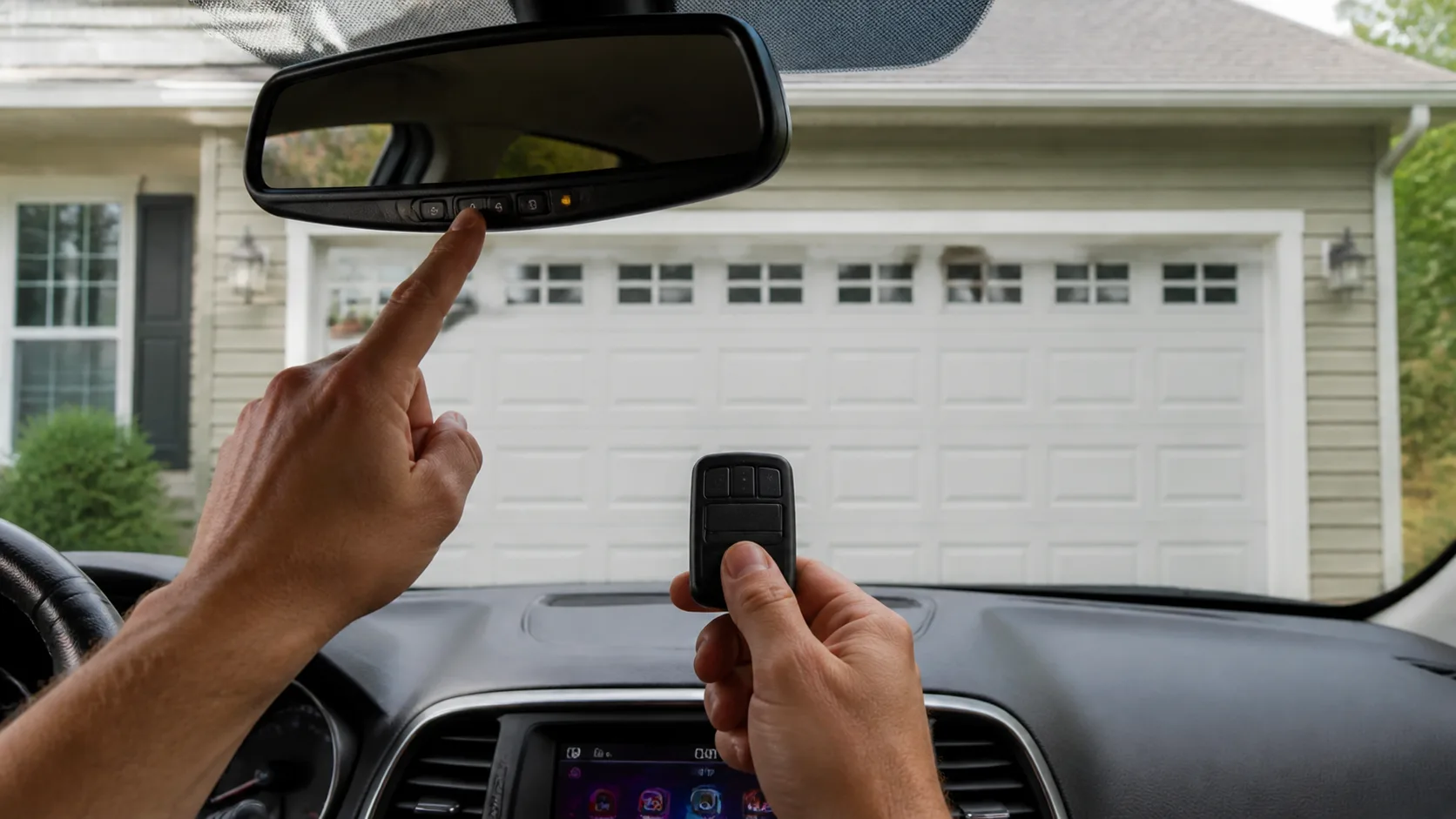
Park the car inside or just outside the garage with the ignition turned on to provide stable power. Hold your working handheld garage remote close to the in-car button you wish to program. Simultaneously press and hold both the handheld remote button and the targeted in-car button. Watch the indicator light on your vehicle. It will usually transition from a slow blink to a rapid flash or solid glow once it captures the frequency.
3. Complete the Rolling Code Handshake
Cloning the frequency alone is not enough for modern systems. Locate the physical "Learn" button on the back or side of the ceiling-mounted motor unit. Press and immediately release this button (do not hold it down, as holding it clears all stored remotes). You will typically have thirty seconds to return to your vehicle. Firmly press and hold your programmed in-car button for two seconds, then release it. Repeat this two-second press up to three times until the overhead opener lights flash or the door begins to move.
When You Need a Compatibility Bridge
If your vehicle was manufactured several years prior to a newly installed opener, or vice versa, the hardware protocols may speak entirely different digital languages. Modern openers use advanced encryption standards that older built-in car systems cannot read natively. When this happens, the car's transmitter will appear to accept the handheld remote code during step one, but the overhead motor will never acknowledge the signal during step two.
In this situation, you do not need a new opener or a new vehicle. Instead, you need a repeater or compatibility bridge. This small plug-in module acts as an interpreter, receiving the transmission from your older car transmitter and converting it into an encrypted signal the new opener understands.
Distinguishing Opener Glitches from Mechanical Failures
Sometimes the issue is not the car transmitter at all, but an underlying mechanical or electrical malfunction with the door system itself. If your wall-mounted console also refuses to operate the door, or if the door starts down and immediately reverses, the problem lies in the garage hardware.
Check your safety sensors near the floor. If the indicator lights on the sensors are flickering or unlit, realign them to clear any obstructions. Inspect the garage door track system to ensure it is free from debris, dust, or bent sections. Keep in mind that moving bearings, steel rollers, and hinges require periodic lubrication to operate freely, but you should never apply lubricant to the inside of the track channels, as this collects dirt and causes rollers to slide rather than roll.
If you notice loose cables, uneven movement, or a loud snap, avoid attempting adjustments yourself. The U.S. Consumer Product Safety Commission (CPSC) cautions homeowners that overhead garage doors and their counter-balance spring assemblies operate under extreme tension and can cause severe injuries if mishandled. If your garage door won't open due to mechanical failure, it is time to have experienced professionals step in.
Professional Garage Door Repair and Maintenance
When electronic troubleshooting does not resolve the issue, or when worn mechanical parts prevent your system from responding to remote commands, you may need professional service to fix garage door problems safely. Overhead doors endure substantial wear and tear from seasonal temperature swings, road salt residue, and daily cycles.
Homeowners seeking trusted garage door repair boston can count on prompt diagnostics for both mechanical alignment and electronic opener issues. Our service technicians also handle complex opener installations and hardware restorations with dedicated garage door repair framingham ma services. If you need assistance across our regional service zones, including specialized saratoga springs garage door repair, professional help ensures your door operates reliably in all weather conditions.
Summary of In-Car Opener Troubleshooting
When an in-car remote fails to operate your garage door, systematic troubleshooting resolves the problem in the vast majority of cases without replacing major components.
- Always complete the second phase of programming using the physical "Learn" button on the motor head to sync rolling code signals.
- Swap standard garage LED bulbs for shielded or opener-rated bulbs to prevent radio frequency jamming.
- Use a compatibility bridge if an older vehicle transceiver cannot communicate with a newer, high-encryption opener.
- Inspect the garage door track system and safety eyes for mechanical or optical blockages before re-attempting setup.
- Never attempt to adjust or repair high-tension counterbalance springs or lift cables without professional training.
If your overhead door is unresponsive, stuck, or making unusual noises, Call Now or Request a Free Estimate from Prime Garage Doors. Our experienced professionals provide same-day service availability and 24/7 phone support to get your system working safely and smoothly.
Frequently asked
- Why does my car garage door opener work up close but not from the driveway?
- This issue is frequently caused by radio frequency interference from standard household LED bulbs installed in or around the motor unit. Upgrading to shielded, opener-rated LED bulbs or clearing signal obstructions typically restores your transmitter's operating range. If range problems continue, an experienced professional can inspect your opener's antenna and receiver logic board.
- Why won't my built-in vehicle button sync to my new garage door opener?
- Modern garage door openers use advanced rolling code encryption that older in-car transmitters cannot interpret natively. Installing a plug-in compatibility bridge or repeater module between the car and the motor unit bridges this communication gap. You must also ensure you press the physical 'Learn' button on the overhead unit to finalize the rolling code pairing sequence.
- How do I know if my garage door opener issue is mechanical rather than electrical?
- If your wall-mounted console also fails to operate the door or the door reverses direction immediately after moving, the issue is typically mechanical. Obstructions in the garage door track system or misaligned safety sensors near the floor often prevent travel regardless of transmitter signals. For issues involving high-tension springs or lift cables, always contact experienced professionals rather than attempting physical adjustments yourself.
- Can standard garage door lubricants help if my door fails to respond to car controls?
- Lubricating moving mechanical hardware like steel rollers, hinges, and bearings keeps the system moving freely so the opener motor does not trip its safety overload. However, you should never spray lubricant inside the garage door track system channels, as this attracts abrasive grit and causes rollers to slide. If your door still hesitates after proper maintenance, the problem may be an opener logic or force setting issue.
- What should I do if clearing my car's transmitter memory does not fix the pairing problem?
- If resetting your vehicle's buttons fails, the overhead opener's internal memory may be full from previously paired keypads, remotes, and older vehicles. Clearing the motor unit's onboard memory and reprogramming your primary devices one at a time often resolves these communication bottlenecks. If you need assistance with complex opener diagnostics, you can Call Now to speak with experienced professionals.