
Garage Door Repair
How to Replace Garage Door Windows: Glass, Inserts, and Panel Compatibility
November 26, 2026 · Prime Garage Doors
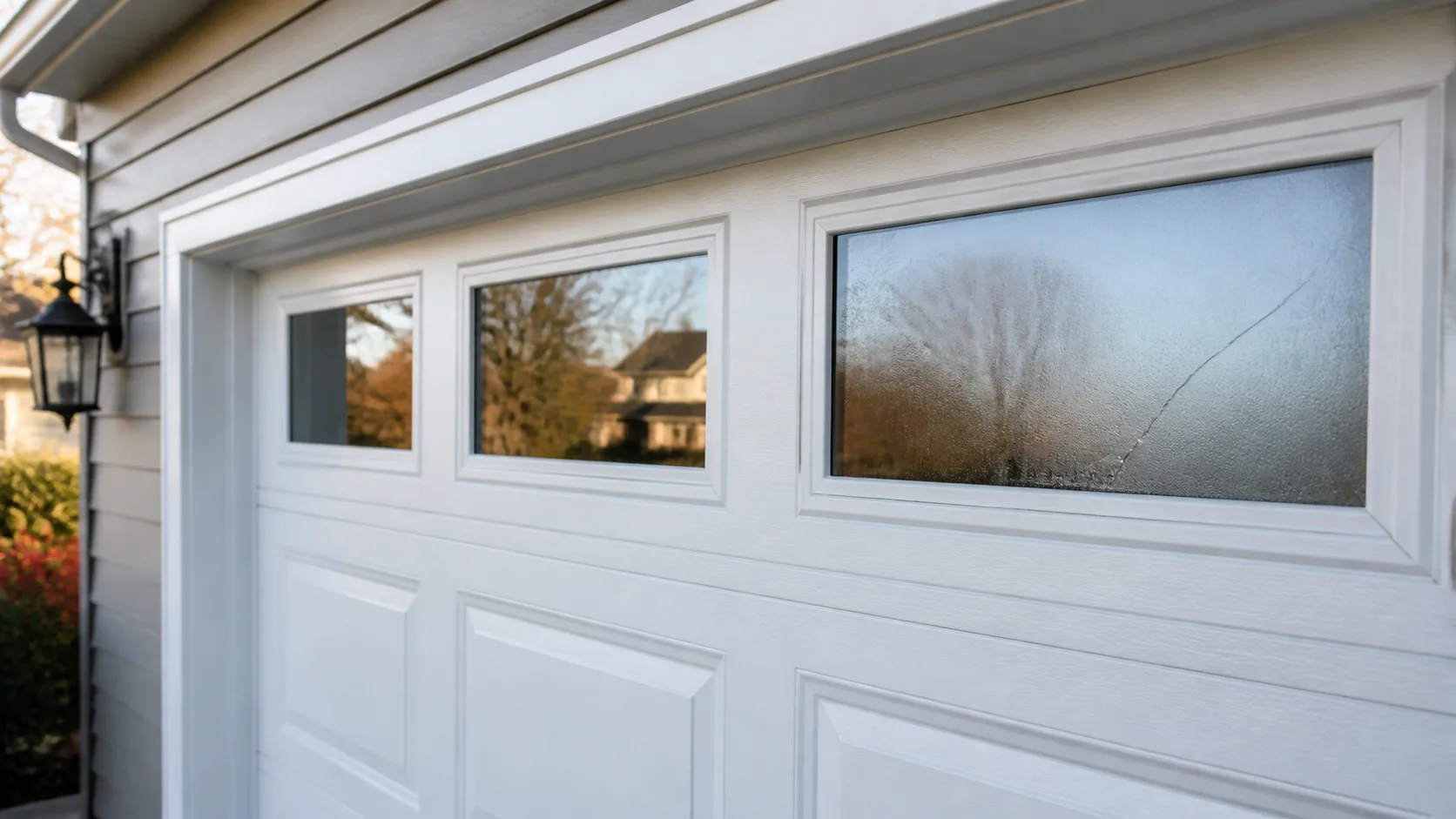
Need to replace garage door windows? Learn how to tell whether the glass, frame, or decorative insert needs replacement, verify manufacturer compatibility, and recognize when damage requires a full section repair instead.
To replace garage door windows, you must determine whether you need a new pane of glass, a replacement exterior decorative insert, or a complete frame assembly matched to your specific door model. While decorative snap-in inserts can often be swapped from the outside, cracked glass or damaged retainers require unscrewing the interior retaining frame to set a new acrylic or tempered glass pane into place. Because window sections must match the structural ribbing, thickness, and weight balance of your existing overhead door, verifying manufacturer compatibility is essential before starting any repairs.
When Should You Replace Garage Door Windows?
Garage door windows take a beating from stray sports equipment, lawnmower debris, high winds, and seasonal temperature swings. Addressing window issues promptly protects your home from weather infiltration and security vulnerabilities. The most common reasons homeowners choose to replace garage door windows include:
- Cracked or shattered glass: Impact damage leaves sharp edges and compromises the security of your garage.
- Broken or discolored inserts: Over time, UV rays turn plastic decorative window inserts brittle and yellow, reducing curb appeal.
- Broken thermal seals: Insulated double-pane units can lose their gas fill or develop broken seals, resulting in permanent fogging, condensation, and heat loss.
- Water leaks: Degraded perimeter caulk or cracked outer frames allow rainwater to seep down inside the panel joints, accelerating rust on steel panels or rot on wood doors.
Choosing the Right Window Material: Glass vs. Acrylic
Modern residential garage doors accommodate several types of glazing. Choosing the correct replacement material depends on your door's insulation level, safety needs, and exposure to potential impacts.
Tempered Safety Glass
Tempered glass is heat-treated to resist blunt impact. If it does break, it crumbles into small, dull pebbles rather than sharp shards. This makes it an ideal, safe choice for homes with active driveways and busy sidewalks.
Insulated Glass Units (IGUs)
If you have an insulated door installed to protect against harsh New England winters, standard single-pane glass will undermine your energy efficiency. Dual-pane insulated glass sandwiches an air or argon layer between two panes, minimizing thermal transfer and reducing condensation during cold snaps.
Acrylic and Polycarbonate
Acrylic panes offer substantial shatter resistance at a lighter weight than glass. Polycarbonate is virtually unbreakable and is commonly used in high-impact areas. However, acrylic can scratch more easily than glass and requires non-abrasive cleaners to prevent clouding.
Section Compatibility and Panel Weight
Replacing a garage door window is rarely a universal process. Window frames are engineered around the specific stamping, profile depth, and skin thickness of the garage door manufacturer. Installing a frame meant for one brand into another usually results in loose fits, water leaks, or panel buckling.
Weight balance is equally critical. Garage door counterbalances operate using finely calibrated springs. Swapping lightweight single-pane acrylic for heavy double-pane tempered glass adds weight to the top section. If the weight profile changes substantially, the overhead door will no longer operate smoothly along the garage door track system, which can cause excessive strain on your motor and drive hardware.
High-Tension Hardware and Panel Safety
Garage door windows are typically located in the top or upper-middle section of the door. When working on any upper panel, you are in close proximity to high-tension counterbalance components. Garage door springs, bottom brackets, and lift cables carry immense mechanical energy capable of causing severe injury.
The U.S. Consumer Product Safety Commission (CPSC) cautions homeowners about the severe hazards associated with overhead door counterbalance components under extreme tension. Never loosen, adjust, or strike hinges attached directly to counterbalance cables, and do not attempt to service panels while the door is partially opened. When in doubt, call experienced professionals to handle panel and hardware adjustments safely.
Steps to Replace a Damaged Garage Door Window
If you are tackling a basic pane swap on a standard sectional steel door, follow these structural steps to ensure a tight, weather-resistant seal:
1. Secure the Door and Prep the Area
Keep the door fully closed and locked in the down position. Clear the floor below the window. Wear heavy leather work gloves and eye protection to protect against loose glass shards.
2. Remove the Interior Retaining Screws
Most sectional steel doors use a two-piece frame sandwich system. The outer frame sits outside, while an inner retaining trim screws into the outer frame from the inside of your garage. Have a helper support the exterior frame while you back out the interior retaining screws with a hand screwdriver.
3. Clear Damaged Glazing and Old Sealant
Carefully lift away the inner frame. Remove the cracked glass or plastic pane. Scrape away hardened butyl tape or cracked caulking from the door panel opening so the new unit sits flush.
4. Set the New Pane and Reseal
Apply fresh exterior-grade weather sealant or high-bond glazing tape along the interior lip of the exterior frame. Set your replacement glass or acrylic pane into position, ensuring it seats squarely against the gaskets.
5. Reinstall the Retaining Frame
Position the interior frame over the new pane. Thread the screws back in by hand before tightening. Tighten screws evenly across the frame in an alternating pattern to avoid warping the plastic or cracking the new glass.
Routine Care for Door Tracks and Moving Hardware
While refreshing your windows, take a few minutes to look over the surrounding hardware. Smooth, quiet travel prevents the vibrations that loosen window frame screws over time.
- Inspect hinges, steel roller shafts, and bearing plates for wear.
- Apply a silicone-based or lithium garage door lubricant directly to moving bearings, metal rollers, and hinge pivot pins.
- Never lubricate the inside of the garage door track system channels; lubricant inside tracks collects grit, promotes roller slippage, and gums up movement.
- Wipe down tracks with a clean, dry microfiber cloth to remove dust and salt residue.
Professional Support Across Multiple Regions
If a cracked window is accompanied by bent tracks, broken hinges, or worn counterbalance springs, troubleshooting the broader issue is the safest course of action. When homeowners need to fix garage door issues that involve multiple mechanical parts, having a technician inspect the door prevents secondary damage to the opener motor.
Homeowners dealing with aging hardware or stuck panels can rely on garage door repair boston teams for prompt structural evaluations. If you are located west of the city, garage door repair framingham ma technicians provide comprehensive assessments of insulated door sections, track alignment, and glass replacement. We also assist homeowners further afield, providing reliable saratoga springs garage door repair solutions for both historic carriage houses and modern panel doors.
Summary of Garage Door Window Replacement
Replacing garage door windows improves appearance, restores interior climate control, and secures your home against weather intrusion. Whether you are changing out a cracked single pane or refreshing faded decorative inserts, using the correct materials and respecting panel weight keeps your system operating smoothly.
- Select the right material: tempered glass for safety, insulated glass for cold climates, and acrylic for impact resistance.
- Always source frames and inserts designed specifically for your door brand and panel thickness.
- Keep moving bearings and hinges lubricated, but never apply lubricants inside the garage door track system.
- Stay clear of high-tension cables and counterbalance assemblies while working on upper panels.
Need experienced professionals to replace broken glass, realign an off-balance panel, or update your window inserts? Contact Prime Garage Doors at (844) 321-0914 to speak with our team. We provide free estimates and 24/7 phone support, with same-day service available across the region. Call Now or Request a Free Estimate today.
Frequently asked
- Can I replace just the glass in my garage door window without replacing the whole panel?
- Yes, in most cases you can replace an individual pane of glass or acrylic without replacing the entire door section. The process involves unscrewing the interior retaining frame, removing the broken pane, and seating the new glazing into place with fresh sealant. If the surrounding panel section is bent, warped, or cracked, replacing the full panel may be required.
- Are garage door window inserts and frames universal across all door brands?
- No, window frames and decorative inserts are engineered to match the specific stamping profile, rib depth, and skin thickness of each individual door manufacturer. Attempting to install frames from a different brand often results in improper seals, air leaks, or panel damage. Always verify your door make and model before purchasing replacement inserts or frame assemblies.
- Will adding insulated glass affect the balance of my overhead garage door?
- Yes, swapping lightweight single-pane acrylic or thin glass for heavy dual-pane insulated units adds noticeable weight to the top door sections. Because garage door counterbalance springs are calibrated to a specific panel weight, changing the glass can cause the door to operate unevenly along the garage door track system. If you upgrade your glazing, have an experienced technician evaluate the spring balance to prevent opener strain.
- Is it safe to replace garage door windows without a technician?
- Swapping a pane of glass on a fully closed, locked door is generally safe if you take basic precautions like wearing heavy work gloves and eye protection. However, because upper windows sit near high-tension counterbalance springs and lift cables, you must never loosen or adjust surrounding lift brackets. If any high-tension hardware is loose or damaged, professional service is strongly recommended to avoid injury.
- Should I apply lubricant to my garage door track system after replacing window hardware?
- You should never apply lubricant to the inside of the garage door track system channels, as grease collects dirt, promotes roller slippage, and gums up movement. Instead, wipe the tracks clean with a dry microfiber cloth to remove dust and road salt residue. Apply silicone or lithium lubricant only to moving metal parts, including roller bearings, hinge pivot pins, and bearing plates.