
Garage Door Repair
garage door won't close all the way ? How to Identify What Is Stopping It
November 26, 2026 · Prime Garage Doors
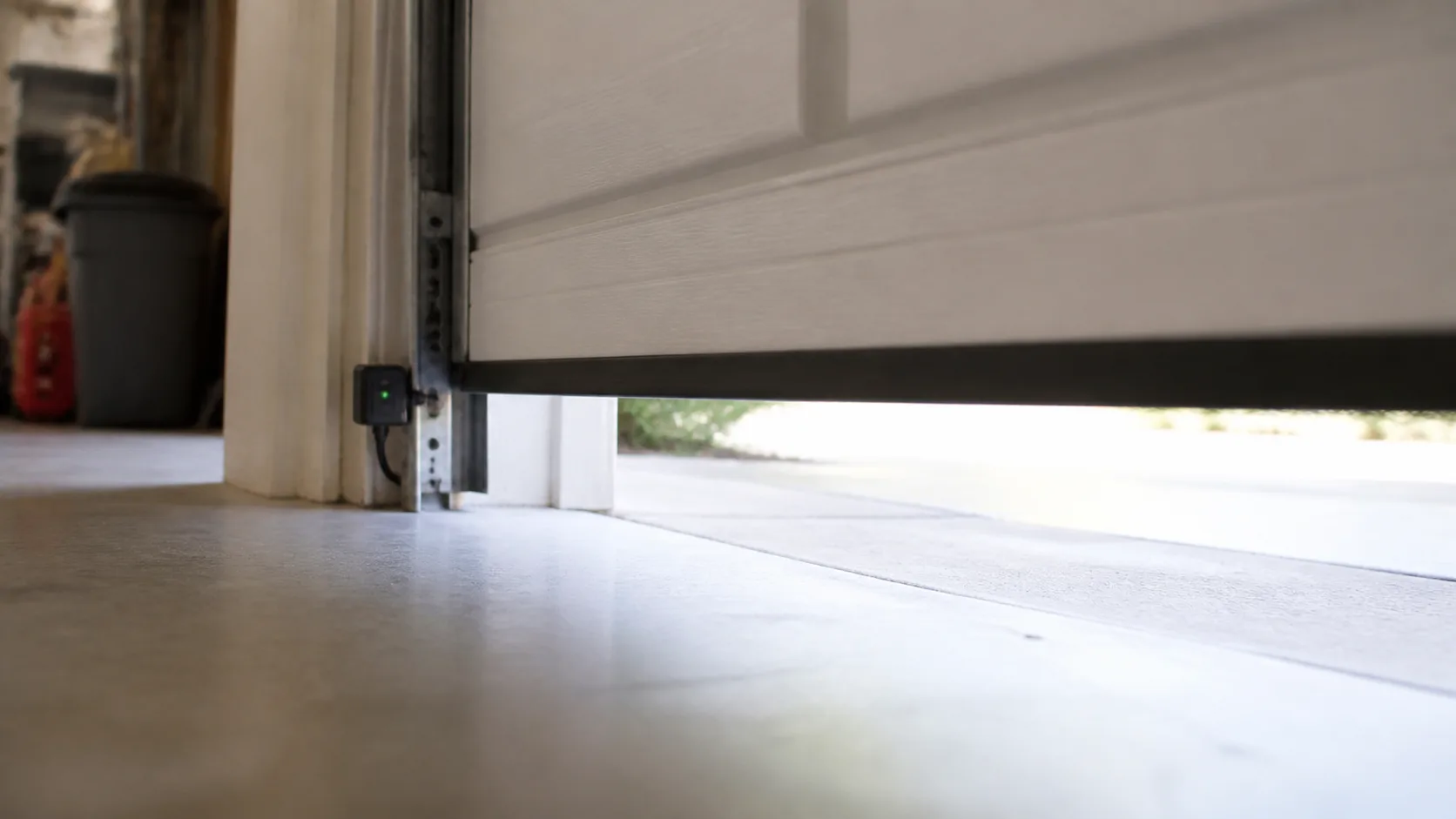
If your garage door won't close all the way, the exact stopping point tells you where to look. Learn how to tell apart mid-cycle reversals, sensor obstructions, and uneven bottom gaps—and know when hardware alignment requires a technician.
Why a Garage Door Won’t Close All the Way
When a garage door won't close all the way, the mechanism is usually responding to an active safety signal, incorrect travel limit calibrations, or mechanical resistance along the garage door track system. Overhead door operators are engineered with internal monitoring systems that detect physical resistance or optical interruptions. Whenever an unexpected obstruction, track pinch, or force spike occurs during the descent, the system immediately arrests downward momentum or triggers a safety reversal to prevent crushing damage and structural wear.
Pinpointing what halts the closure depends on the exact stage of the cycle where the interruption takes place. By isolating whether the door stumbles immediately, binds midway along the tracks, rebounds after floor contact, or rests unevenly on the foundation, homeowners can safely identify the source of the issue before seeking service.
Diagnosing by Descent Phase: Where Does the Downward Travel Fail?
System failures leave specific behavioral clues. Tracking precisely when the door changes course provides direct insight into which safety or mechanical feature is intervening.
Phase 1: Reversing Immediately at the Header
If the motor activates, hums, moves the door only an inch or two, and immediately sends it back to the open position, the opener's safety system is likely detecting an immediate disruption. This response is characteristic of an obstructed or disconnected photo-eye beam, an uncalibrated starting force limit, or extreme resistance caused by a fractured counterbalance spring that prevents the panels from shifting into the radius.
Phase 2: Binding or Stalling Mid-Travel
A door that travels downward smoothly before grinding to a halt partway down typically suffers from physical friction within the garage door track system. Worn steel rollers with frozen bearings, bent track flanges, or loose wall mounting brackets that squeeze the rails inward create severe drag. When the operator motor senses this friction, its downward force safety threshold trips, interpreting the mechanical bind as an obstruction.
Phase 3: Bouncing Off the Floor
When the panels descend all the way to the concrete threshold, touch down firmly, and immediately reverse back to the fully raised position, the issue is rarely optical. Instead, the opener travel limits are set too deep. The motor drives the door past the true floor level, registers the solid concrete as a foreign object beneath the seal, and executes an automated safety reversal.
Phase 4: Stopping Short with an Even Gap
If the door halts several inches above the foundation without reversing, the down-travel limit module on the motor needs recalibration. Alternatively, an aging bottom rubber seal may have hardened or warped, creating premature resistance before the bottom edge seats fully.
Phase 5: Stopping with a Slanted or One-Sided Opening
A door that seals on the left corner while leaving daylight beneath the right corner signals an uneven mechanical balance. This occurs when a lift cable slips out of its drum groove, stretches unevenly, or when shifting foundation slabs leave an irregular floor line across the doorway opening.
Safe Visual Inspection Protocol for Homeowners
Because overhead door assemblies support substantial weight under mechanical tension, observation must remain strictly visual. Never stand under a suspended door, never attempt to manually pull down a sticking door, and do not disengage emergency releases when a door is hung up mid-cycle.
- Check the Track Pathways: Look directly up both vertical rails and along the horizontal overhead sections of the garage door track system. Check for dislodged framing fasteners, rust scale, foreign debris, or bent track lips that pinch roller stems.
- Inspect the Counterbalance Assembly: Look above the closed opening (or above the header) at the torsion shaft and center springs, or inspect the side extension springs. If a coil shows a distinct separation or gap, the spring has snapped and the system must remain untouched.
- Review Opener Error Codes: Look at the indicator LEDs on the motor housing ceiling unit or the wall console. Opener units transmit diagnostic blink codes that indicate whether the problem stems from photo-eye faults, motor RPM sensor failures, or travel limit interruptions.
- Examine the Cables and Drums: Inspect the steel lifting cables running from the bottom fixtures up to the cable drums. Check whether both cables sit tightly wrapped in their respective drum grooves without fraying or slack loops.
The Difference Between Optical Trip-Ups and Mechanical Binds
Distinguishing between an optical fault and a physical bind narrows down the repair scope quickly:
Optical Interruptions
Safety photo-eyes sit on both sides of the door opening close to the floor. When operational, both sending and receiving units display steady indicator lights. If a light flickers, turns off, or changes color during descent, the beam is interrupted. Common culprits include:
- Cobwebs, dried mud, or salt residue coating the optical glass.
- Misaligned mounting brackets bumped out of true focus by lawn tools or trash bins.
- Low-angle sunlight shining directly into the receiving optic, washing out the infrared beam and requiring light sensor repair.
- Loose low-voltage wiring connections running from the eyes to the power head.
Mechanical Binds
A mechanical bind produces audible groaning, shuddering, or popping sounds as rollers drag through the curves of the garage door track system. While optical faults cause instant reversal with flashing overhead courtesy lights, mechanical friction causes the motor to strain against physical resistance before shutting down.
Proper Lubrication: What to Protect and What to Avoid
Routine hardware care reduces friction and prevents unnecessary service interruptions, but applying lubricants incorrectly can worsen downward travel problems. Apply a specialized silicone-based or lithium garage door spray strictly to moving metal roller bearings, hinge pivot joints, and bearing plates. These moving components require lubrication to rotate freely without binding.
Never apply oil, grease, or spray lubricant inside the vertical or horizontal channels of the garage door track system. Tracks are designed to provide clean traction for rolling wheels. Coating track channels with wet lubricants collects dirt, sawdust, and airborne debris, creating a sticky slurry that causes rollers to slide and jam rather than rotate.
Weather Factors That Halt Downward Travel
Seasonal climate fluctuations directly affect overhead garage door mechanics. In New England, severe winter freezes can cause concrete slabs to heave upward slightly, altering the exact point where the door meets the ground. When the floor level rises even fractionally, an opener configured for warmer conditions may register the elevated threshold as an obstruction, triggering a rebound.
Additionally, sub-freezing temperatures stiffen legacy motor lubricants inside the drive rail, increasing resistance on the trolley arm. Cold snaps also harden bottom weather seals, reducing their flexibility and preventing the door panels from settling cleanly into place.
High-Tension Hardware Safety and Professional Care
While homeowners can comfortably wipe sensor lenses, clear floor debris, and lubricate roller bearings, structural hardware adjustments demand specialized training. The counterbalance springs, bottom bracket fixtures, and steel lifting cables are constantly loaded with high mechanical force to offset the deadweight of the door panels.
According to safety alerts from the U.S. Consumer Product Safety Commission (CPSC), garage door counterbalance assemblies and high-tension hardware can cause severe physical trauma if loosened, adjusted, or dismantled without specialized tools and professional training. If an inspection reveals a broken spring, unwound cable, twisted track section, or sagging door section, leave the door in place and arrange for professional service immediately.
Professional Solutions Across Regional Service Areas
When minor sensor cleanings do not resolve the issue, choosing an experienced service team ensures that your system receives accurate limit calibration, track realignment, and mechanical force balancing. Homeowners looking to fix garage door issues can rely on our skilled crews for dependable diagnosis and repair.
Our experienced technicians provide complete support across multiple regions. Whether you require prompt garage door repair boston homeowners call on for historic carriage houses, comprehensive garage door repair framingham ma residents trust after severe winter storms, or dependable saratoga springs garage door repair for residential properties, our service vehicles arrive fully equipped to resolve travel failures on all major door and opener brands.
Summary: Identifying Why a Garage Door Won’t Close
When a garage door refuses to finish its downward cycle, systematic observation reveals whether the problem stems from electronic safety sensors, travel limit settings, or track friction. Addressing optical alignment and surface debris safely restores normal operation, while deeper mechanical and counterbalance faults require trained attention.
- Identify the exact failure point: instant reversal, mid-track binding, floor rebound, or uneven resting gaps.
- Clean and verify safety sensor alignment without attempting to bypass safety photo-eyes.
- Keep moving roller bearings and hinge pivots lubricated, avoiding any grease inside the garage door track system.
- Never loosen or adjust high-tension counterbalance springs, lifting cables, or bottom brackets.
If your garage door continues to stop short, reverse without warning, or sit unevenly across the opening, Prime Garage Doors delivers straight answers and dependable results. With same-day service available, free estimates, and 24/7 phone support, our team is ready to help. Call Now at (844) 321-0914 or Request a Free Estimate to restore your garage door to safe, reliable operation.
Frequently asked
- Why does my garage door touch the floor and immediately reverse?
- When a garage door hits the floor and bounces back up, the opener down-travel limit is typically set too deep. The motor drives the door past the natural floor line, detects the hard concrete as a foreign obstruction, and triggers an automated safety reversal. Recalibrating the downward travel limits on the opener power head corrects this problem.
- Why does the garage door reverse immediately and flash the opener lights?
- An immediate reversal accompanied by flashing overhead lights points directly to a safety photo-eye issue. The infrared beam between the sending and receiving sensors is likely blocked by debris, out of alignment, or blinded by direct sunlight. Inspecting the sensor lenses and ensuring both indicator LEDs remain lit will typically clear the fault.
- Can freezing winter weather prevent my garage door from closing completely?
- Yes, winter cold snaps can cause concrete slabs to heave upward slightly, raising the floor line where the door meets the ground. Sub-freezing temperatures also stiffen bottom rubber weather seals and thicken lubricants along the opener rail, which increases mechanical resistance. When the motor registers this excess drag, its downward safety threshold halts the travel cycle.
- Should I apply lubricant to the tracks if the door is sticking on the way down?
- You should never spray oil or grease inside the channels of the garage door track system. Adding lubricants inside the tracks collects dirt, dust, and grit, creating a gummy paste that makes rollers slide rather than spin. Instead, apply a dedicated silicone or lithium spray exclusively to moving roller bearings and hinge pivot pins.
- What causes a garage door to stop with a slanted gap along the floor?
- A door that lands unevenly with daylight showing under one side usually suffers from an unspooled or frayed lift cable. It can also stem from an unevenly tensioned counterbalance assembly or an irregular foundation slab. Because lift cables and counterbalance components remain under extreme tension, realigning an uneven door requires service from experienced professionals.