
How to Maintain Tracking Hardware for Quick Garage Door Repair Prevention
August 27, 2026 · Prime Garage Doors
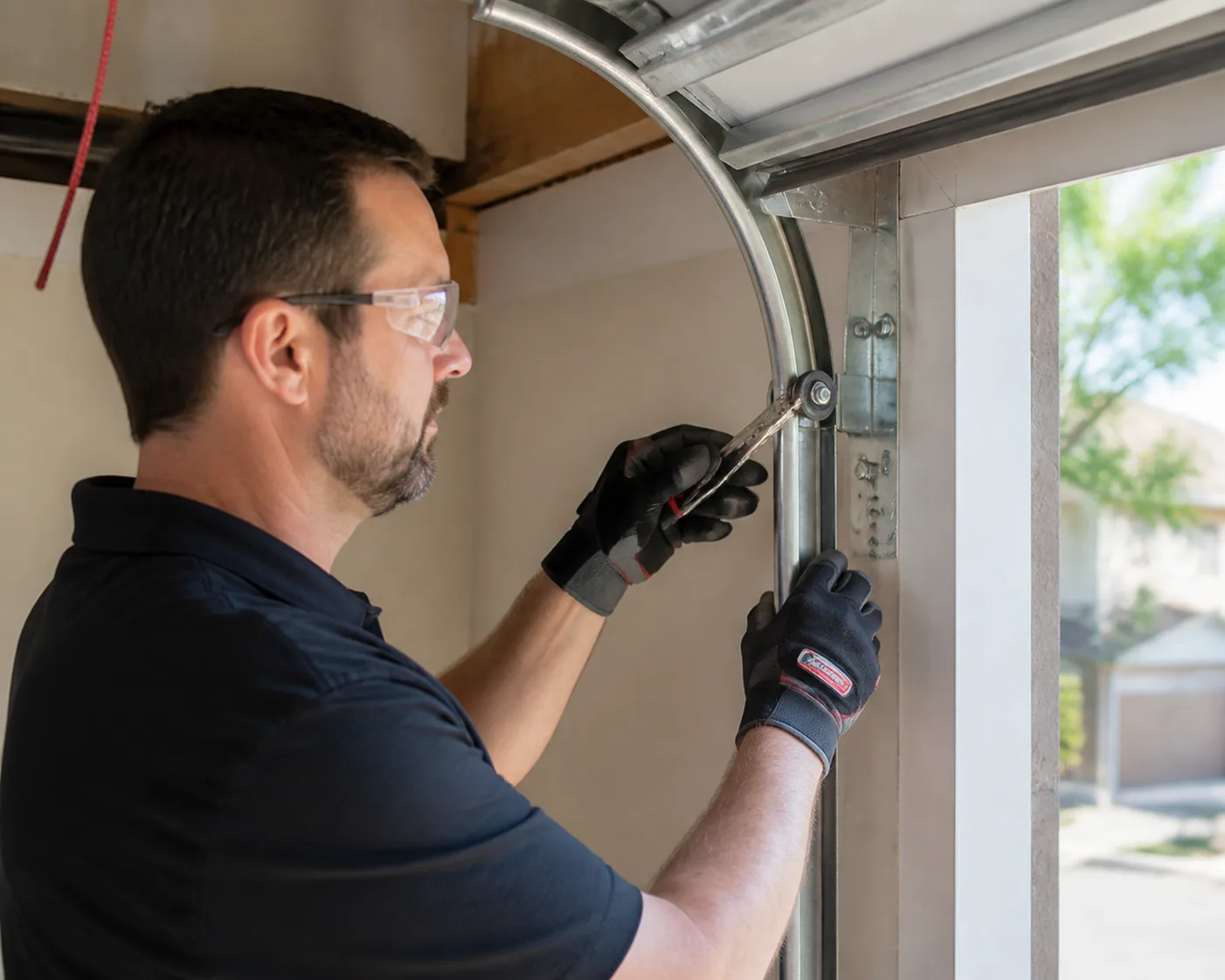
Is your overhead door moving slowly or making unusual tracking sounds? Learn how to inspect basic hardware safely before calling for professional quick garage door repair.5
Understanding the Garage Door Track System
A residential overhead garage door uses a track system to guide the door from its closed vertical position to the horizontal position above the garage opening. The system typically includes vertical tracks, curved sections, horizontal tracks, mounting brackets, rollers, and hinges.
Rollers are attached to the door sections and travel inside the tracks as the door opens and closes. Hinges connect the individual door sections and allow them to follow the curved portion of the track. For the system to operate properly, the tracks need to remain securely mounted and properly positioned. Damaged tracks, worn rollers, loose hardware, or obstructions can cause the door to become noisy, difficult to operate, or come off track.
How New England Weather Affects Garage Door Hardware
Garage doors in the Greater Boston area are exposed to significant seasonal changes. Cold temperatures, moisture, road salt, sand, and dirt can all contribute to hardware wear over time.
Winter road salt and moisture can contribute to corrosion on exposed metal components. Dirt and sand can collect around the bottom of the tracks, while temperature changes can affect lubricants and other moving parts.
These conditions do not necessarily cause a garage door problem on their own, but they can contribute to normal wear when combined with years of daily use.
Signs of Garage Door Track Problems
Paying attention to how your garage door sounds and moves can help identify developing problems before they become more serious.
Watch for signs such as:
Scraping or grinding noises: These may indicate worn rollers, damaged tracks, or another mechanical issue.
Jerky or uneven movement: This can result from worn rollers, track problems, or an issue with the door's balance.
Visible track damage: Dents, bends, or crushed sections can interfere with normal roller movement.
Loose mounting hardware: Accessible brackets or fasteners can loosen over time because of normal vibration.
A noticeable change in operation: If the door suddenly sounds or moves differently, it is worth having the system inspected.
Rollers leaving the track: This is a more serious problem and should generally be handled by a professional.
Important Garage Door Safety Precautions
Garage door tracks are part of a larger mechanical system that includes high-tension springs and lifting cables.
Never attempt to adjust or remove torsion springs, extension springs, lifting cables, bottom brackets, or other tension-loaded components yourself. These parts can store significant mechanical energy and may cause serious injury if handled incorrectly.
Never place your hands or fingers inside the track while the door is moving.
For basic visual maintenance, useful items include a flashlight, microfiber cloth, safety glasses, work gloves, a standard socket set for accessible hardware, and a lubricant specifically designed for garage door components.
How to Maintain Garage Door Tracks Step by Step
Regular visual maintenance does not replace professional servicing, but it can help homeowners identify dirt, visible damage, and obvious hardware problems before they become more serious.
1. Clean Dirt and Debris From the Tracks
Dirt, leaves, sand, cobwebs, and road salt can collect around the vertical and horizontal tracks.
With the door stationary, wipe accessible areas of the tracks with a clean cloth. If additional cleaning is needed, apply a mild household cleaner to the cloth rather than spraying the track directly.
The inside of the track should remain relatively clean and free of heavy grease.
Do not pack grease or thick lubricant into the track channels. Garage door rollers are designed to roll along the track, and excessive grease can collect dirt and debris.
2. Inspect Accessible Mounting Hardware
Look along the vertical tracks and overhead supports for visibly loose or damaged mounting hardware.
If an accessible fastener is clearly loose and you can safely reach it while the door is stationary, it may be possible to snug it with the appropriate tool. Do not remove track brackets or hardware that appears to be connected to the door's spring or cable system.
If a track has shifted significantly, do not try to force it back into position.
3. Check Track Alignment Visually
Stand back and look at both sides of the garage door opening.
The vertical tracks should appear straight and properly positioned relative to the door. Look for:
Bent or crushed metal
Unusual gaps between the track and door
Sections that appear twisted
Track brackets that have pulled away from the wall
Rollers that appear to bind or sit incorrectly
Even minor track damage can affect the way the entire door operates. If the track is bent, severely misaligned, or damaged after an impact, professional garage door track repair is the safer option.
4. Inspect Rollers and Hinges
Rollers and hinges move every time the garage door operates, making them important parts of routine maintenance.
Look for cracked or worn nylon rollers, excessive rust on steel rollers, loose roller stems, damaged hinges, or missing hardware.
There is no need to disassemble the door for a basic inspection. If a roller is badly damaged or a hinge is bent, have a technician evaluate the component rather than attempting to remove it yourself.
5. Lubricate the Appropriate Moving Parts
Proper lubrication can reduce friction and help minimize noise from moving garage door components.
Use a lubricant specifically designed for garage door hardware and follow the product manufacturer's instructions. Depending on the hardware, lubrication may be appropriate for roller bearings, hinge pivot points, and certain bearing components.
Avoid spraying lubricant heavily onto the inside of the tracks.
It is also important not to assume that every component requires lubrication. Some garage door hardware is designed to operate with little or no additional lubricant.
6. Perform a Visual and Auditory Operation Check
After completing basic cleaning and inspection, operate the door from a safe position.
Watch how the door travels through the vertical tracks and into the overhead section. Listen for grinding, scraping, popping, or unusually loud operation.
Pay attention to whether the door moves smoothly and evenly.
If the door suddenly becomes crooked, jams, comes off track, or makes a loud mechanical noise, stop operating it and contact a qualified garage door technician.
Seasonal Garage Door Track Maintenance
A simple inspection twice a year can help homeowners identify developing problems before they turn into unexpected breakdowns.
Spring and fall are good times to inspect your garage door because seasonal changes can bring increased moisture, road salt, dirt, and temperature fluctuations.
During these inspections:
Remove dirt and debris around the bottom of the tracks.
Look for rust or visible track damage.
Check accessible mounting brackets for obvious looseness.
Inspect rollers and hinges for visible wear.
Examine the weather seal around the bottom and sides of the door.
Listen for unusual noises during operation.
Keep bicycles, ladders, lawn equipment, and other heavy objects away from the tracks. Accidentally hitting a track with a vehicle or piece of equipment can bend the metal and create an alignment problem.
When to Skip DIY Maintenance and Call a Professional
Basic cleaning and visual inspection are reasonable maintenance tasks, but some garage door problems should not be handled by a homeowner.
Contact a professional if you notice:
Off-track rollers: Rollers have moved outside the track or the door is hanging unevenly.
Bent or crushed tracks: The track has been damaged by a vehicle, equipment, or another impact.
Frayed lifting cables: Cable strands are broken, damaged, or visibly loose.
Broken springs: A torsion or extension spring has visibly broken.
Damaged bottom brackets: Brackets connected to the lifting cables appear loose, bent, or damaged.
A crooked or unusually heavy door: The door no longer moves normally or appears difficult to support.
Sudden loud mechanical noises: A loud bang or pop is followed by a noticeable change in door operation.
Do not attempt to remove a bottom bracket, adjust a spring, reposition a tensioned cable, or force an off-track door back into place.
If your garage door is binding, hanging unevenly, or refusing to operate, continuing to use the opener may cause additional damage. A professional inspection can determine whether the problem involves the tracks, rollers, cables, springs, opener, or another component.
Garage Door Track Repair and Maintenance in Greater Boston
Prime Garage Doors provides residential garage door repair and maintenance services throughout Greater Boston and surrounding communities.
Our services include:
Garage door track inspection and repair
Off-track garage door repair
Roller replacement
Hinge replacement
Garage door spring replacement
Garage door cable repair
Garage door opener repair
Garage door opener installation and upgrades
Garage door replacement and installation
The appropriate repair depends on the condition of the door and the cause of the problem. A professional inspection helps identify the damaged component and determine whether repair or replacement is the most appropriate solution.
Why Choose Prime Garage Doors?
When a garage door stops operating normally, homeowners need a straightforward explanation of the problem and the available repair options.
Prime Garage Doors serves homeowners throughout Greater Boston, including Cambridge, Newton, Somerville, Boston, and surrounding communities.
Same-Day Service Availability: Prompt service may be available for urgent garage door problems.
24/7 Phone Support: Call (844) 321-0914 when you need assistance.
Free Estimates: Understand the recommended repair before work begins.
Experienced Professionals: Technicians are equipped to diagnose common residential garage door and opener problems.
Summary: Garage Door Track System Maintenance
Regular garage door track maintenance can help keep your door operating smoothly and make it easier to identify problems before they become major repairs.
Cleaning debris, inspecting accessible hardware, checking for visible track damage, and properly lubricating appropriate moving components are simple maintenance steps homeowners can perform. However, springs, cables, bottom brackets, and severely damaged tracks should be left to trained garage door professionals.
Keep tracks clean: Remove dirt, sand, salt, and other debris from accessible areas.
Inspect for damage: Look for bent tracks, loose brackets, worn rollers, and damaged hinges.
Lubricate correctly: Use garage-door-specific lubricant on appropriate moving components and keep heavy grease out of the tracks.
Watch for changes: Grinding, scraping, crooked movement, or sudden noises can indicate a developing problem.
Leave high-tension repairs to professionals: Never adjust springs, cables, or bottom brackets yourself.
If your garage door is noisy, stuck, off track, or no longer moving normally, Prime Garage Doors can inspect the system and recommend the appropriate repair. With same-day service availability, 24/7 phone support, and free estimates, our team serves homeowners throughout Greater Boston.
Call (844) 321-0914 or Request a Free Estimate to schedule professional garage door repair today.
Frequently asked
- How often should I clean and inspect my garage door tracks?
- You should visually inspect and clean your garage door tracks at least twice a year, ideally in spring and right before New England winter cold snaps hit. Wiping away grit, cobwebs, and road salt prevents roller binding and excessive mechanical friction. Regular visual checks help homeowners catch loose track brackets early before a complete door jam occurs.
- Should I apply grease directly inside the garage door tracks?
- No, you should never apply thick grease or oil directly inside the flat metal track channels. Heavy grease traps dirt, road debris, and dust, which hardens into a sludge that causes rollers to skid instead of roll. Keep the track interior clean and dry, and apply synthetic lubricant only to the roller bearings and hinge pivot points.
- Can I hammer a bent garage door track back into alignment myself?
- Attempting to hammer bent tracks back into place usually creates uneven surfaces that cause rollers to pop out or bind. Furthermore, vertical and overhead tracking sits adjacent to lift cables and spring components held under extreme tension. It is always safest to rely on experienced professionals to realign or replace damaged track sections.
- What causes garage door tracks to move out of alignment?
- Continuous vibration from everyday door cycles naturally backs lag bolts out of wall studs over time. Intense temperature shifts and winter freeze-thaw cycles across Greater Boston also cause garage framing and metal brackets to shift slightly. Even a slight alignment gap will cause your door to drag, squeal, or strain the opener motor.
- What should I do if my garage door comes off its tracks?
- If your door pops off its track, stop using your automatic opener immediately and do not attempt to force the door shut by hand. Off-track doors are extremely heavy and unstable because high-tension cables can snap or unwind suddenly. Contact Prime Garage Doors at (844) 321-0914 to Request a Free Estimate and arrange same-day service with experienced professionals.