
Garage Door Repair
Job storyGarage Door Repair Enfield CT: Common Problems, Safety, and Professional Solutions
August 27, 2026 · Prime Garage Doors
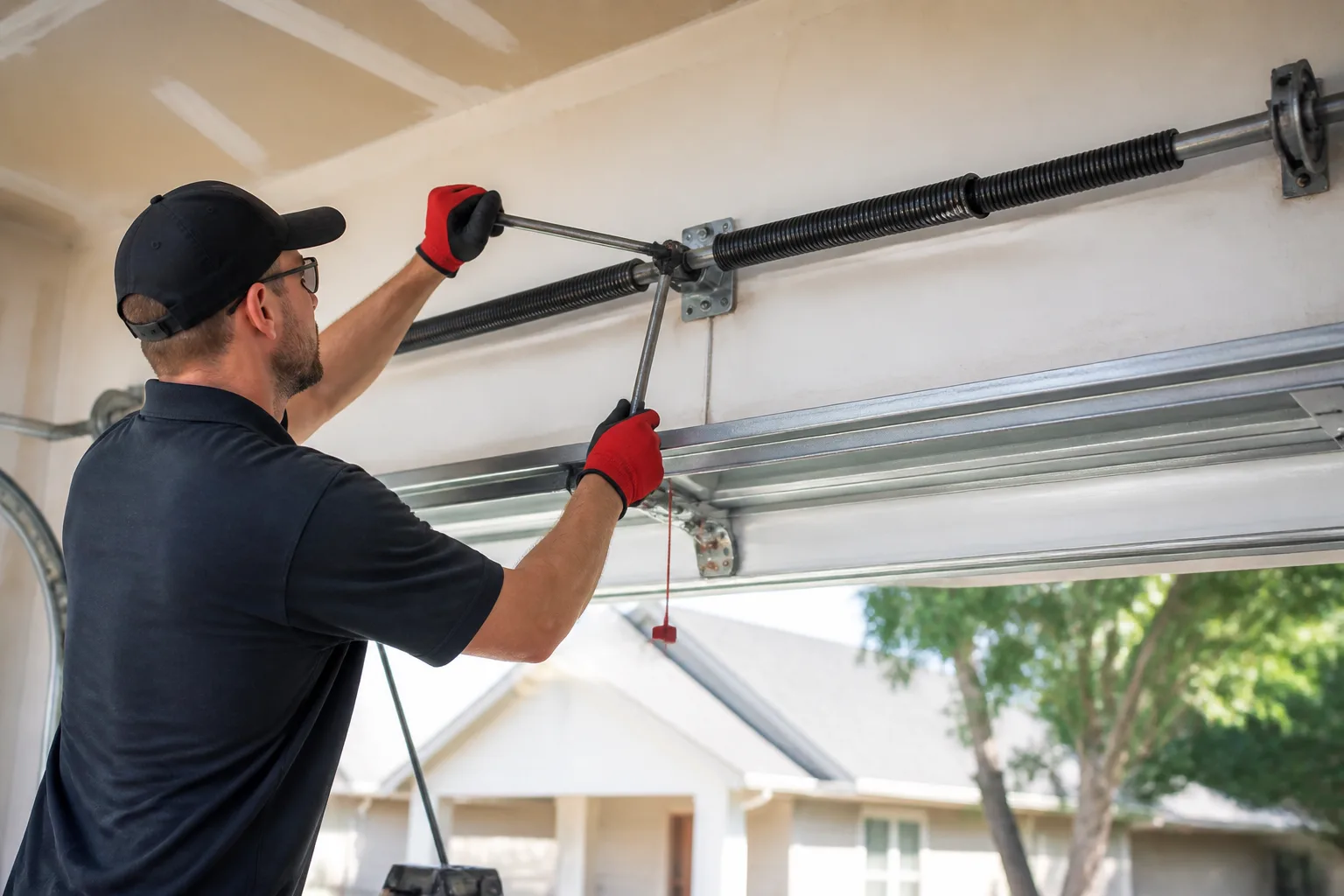
Stuck garage door, broken spring, or faulty opener in Enfield, CT? Trust our expert technicians for fast, professional, and emergency same-day garage door repair services.
When a garage door suddenly stops opening, becomes difficult to lift, makes loud grinding or popping sounds, or moves unevenly along its tracks, prompt professional attention can help prevent further damage and restore safe access to the garage. For homeowners searching for garage door repair Enfield CT, identifying the cause of the problem is the first step toward a safe and effective solution.
A malfunctioning garage door can leave a vehicle trapped inside or outside, reduce home security, and place additional strain on the opener and other mechanical components. Garage doors rely on several interconnected parts, including torsion or extension springs, lift cables, drums, rollers, hinges, tracks, brackets, safety sensors, and an automatic opener. When one component fails, the resulting imbalance can affect other parts of the system.
For that reason, professional garage door repair in Enfield, CT should begin with an inspection rather than replacing a single component without determining why the door stopped working.
Representative Garage Door Repair Scenario: Broken Torsion Spring
Consider a representative service scenario involving a residential garage door that suddenly becomes impossible to open.
The Call
A homeowner hears a loud metallic bang from the garage and discovers that the door will no longer open normally. The door may appear unusually heavy, remain closed, or sit unevenly when someone attempts to lift it manually.
A sudden bang is often associated with a broken spring, but the sound alone does not establish the exact cause. A professional inspection is needed to determine whether the problem involves a torsion spring, lift cable, drum, roller, track, hinge, opener, or another component.
What the Technician Inspects
A qualified technician begins with a visual and functional inspection rather than repeatedly operating a damaged door.
The inspection may include:
Torsion or extension spring assemblies
Lift cables and cable drums
Vertical and horizontal tracks
Rollers and hinges
Mounting brackets and fasteners
Door sections and hardware
Automatic opener components
Safety reversing sensors
Manual balance and door movement
The U.S. Consumer Product Safety Commission recommends professional attention when a garage door is not properly balanced or binds and sticks during operation. Its safety materials also address springs, cables, and other components that can create hazards when improperly repaired. (cpsc.gov)
If a torsion spring is broken, the technician can determine whether the spring is the only failed component or whether the failure has also affected a cable, drum, roller, track, or other hardware.
How the Repair Is Performed
Spring replacement is not a one-size-fits-all repair. Replacement springs should be properly rated for the particular garage door and its configuration. Factors such as door weight, dimensions, spring arrangement, shaft configuration, and expected cycle life can affect the appropriate replacement.
Because garage door springs store significant mechanical energy, homeowners should not attempt to wind, unwind, remove, or replace a torsion spring without appropriate training and equipment.
If a lift cable has slipped from its drum or become damaged, the technician should determine why it happened before reinstalling or replacing it. Simply putting a cable back onto a drum without correcting an underlying imbalance or alignment problem can allow the issue to return.
Once the appropriate components have been installed or repaired, the technician can inspect the tracks, rollers, hinges, and other moving hardware. The door should then be checked for proper balance and smooth movement before the automatic opener is returned to normal operation.
The Outcome
A successful repair should do more than make the door open once. The goal is to restore controlled movement, proper balance, appropriate cable routing, and reliable opener operation.
The technician can manually evaluate the door's movement, confirm that it does not bind or fall unexpectedly, and verify the operation of the opener and its safety features.
Common Causes of Garage Door Problems in Enfield, CT
Garage doors operate through thousands of opening and closing cycles over their service life. Seasonal temperature changes, moisture, snow, ice, and road salt can contribute to environmental stress on metal components in Connecticut and throughout New England.
However, cold weather should not automatically be identified as the cause of a specific failure. Springs are wear components, and repeated cycles gradually reduce their service life. Environmental conditions can contribute to corrosion, changes in lubrication, or other mechanical stress, but the exact cause should be determined through inspection.
Spring Fatigue and Normal Wear
Torsion springs repeatedly store and release energy every time a garage door opens and closes. Over many cycles, the metal can eventually fatigue and the spring may break.
A broken spring may produce a loud popping or snapping sound. Other warning signs can include a door that suddenly feels much heavier, an opener that struggles to lift the door, or a visible gap in the spring coil.
Homeowners looking for garage door spring repair in Enfield CT should avoid attempting to wind or replace the spring themselves because of the stored mechanical energy involved.
For more information, see our guide to garage door spring repair.
Frayed or Damaged Lift Cables
Lift cables help transfer the spring system's lifting force to the garage door. A cable that is frayed, corroded, loose, or improperly positioned can contribute to uneven door movement.
A cable can also come off the drum when the door becomes unbalanced or when another mechanical problem affects the lifting system. Because the cable and spring system work together, a cable problem should be evaluated as part of the complete door system.
Track Misalignment and Roller Problems
Garage door rollers travel inside the tracks and help guide the door sections as they move upward and downward. Bent tracks, loose brackets, worn rollers, or an obstruction can cause the door to bind, scrape, shake, or move unevenly.
A track problem should not automatically be attributed to weather. A technician should inspect the track position, mounting points, rollers, and door movement to identify the actual cause.
Homeowners searching for garage door repair Enfield CT may encounter both spring-related failures and problems involving tracks, rollers, hinges, and other hardware. A complete inspection helps distinguish between these issues.
Safety Sensor Problems
Automatic garage door openers use safety systems designed to reduce the risk of entrapment. If the photo-eye sensors become misaligned, dirty, obstructed, or otherwise malfunction, the opener may refuse to close the door or may reverse during closing.
Homeowners should never bypass or disable these safety features. The CPSC explains that residential garage door operators are subject to federal safety requirements concerning entrapment protection. (cpsc.gov)
If the door reverses unexpectedly, will not close, or behaves differently after an obstruction or repair, the safety system should be inspected rather than defeated.
Garage Door Opener Problems
Not every garage door failure is mechanical. Sometimes the door itself is in reasonable condition while the automatic opener is experiencing a problem.
Possible causes include:
A dead remote-control battery
A blocked or misaligned safety sensor
A door that has become too heavy because of a spring failure
An obstruction in the door's path
Track or roller problems
Incorrect opener travel limits
Mechanical wear inside the opener
Electrical or control issues
LiftMaster identifies several issues that can affect garage door opener operation, including broken springs, track alignment, lubrication, obstructions, and safety-sensor alignment. (liftmaster.com)
If your remote control is not communicating correctly with the opener, you can also consult our guide to LiftMaster 890MAX programming.
For homeowners who need garage door opener repair in Enfield CT, the technician should first determine whether the opener itself has failed or whether a mechanical door problem is preventing normal operation.
Safety Warning: High-Tension Garage Door Components
Garage door springs and certain cables and brackets can store substantial mechanical energy. A failed component may move suddenly or release stored tension if handled incorrectly.
For this reason, homeowners should avoid attempting to wind or unwind torsion springs, remove spring assemblies, manipulate cable drums under tension, or disassemble high-tension components without appropriate professional training and tools.
CPSC safety materials emphasize the importance of proper garage door balance and professional attention to spring, cable, and related hardware problems. (cpsc.gov)
If a spring has snapped, a cable has come off its drum, or the door is visibly crooked or off its tracks, keep people away from the moving door and contact a qualified garage door professional. Do not repeatedly activate the opener in an attempt to force the door open. Continued operation can potentially worsen damage to the opener, cables, rollers, tracks, or door sections.
What to Expect From Professional Garage Door Repair in Enfield CT
A professional service visit should focus on diagnosis, safety, and appropriate repair rather than simply replacing the most visible broken part.
Depending on the symptoms, a technician may:
Inspect the complete door and opener system.
Identify failed or worn components.
Check whether the door is properly balanced.
Inspect springs, cables, drums, rollers, tracks, hinges, and brackets.
Determine whether the opener has been affected by the mechanical failure.
Explain the recommended repair.
Install properly rated replacement components where necessary.
Check door travel and balance after the repair.
Verify automatic opener operation.
Check safety sensors and reversing functions as applicable.
The exact work depends on the door's design and the problem discovered during inspection. A reputable technician should be able to explain why a component needs replacement instead of relying solely on generic recommendations.
Preventive Garage Door Maintenance
Professional repair addresses an existing problem, but routine observation can help homeowners identify developing issues earlier.
Watch for:
Increasingly loud operation
Grinding, scraping, or popping sounds
A door that shakes or moves unevenly
Visible spring gaps
Frayed or loose cables
Rollers that appear damaged or worn
Tracks that appear bent or displaced
A door that becomes unusually heavy
An opener that struggles to lift the door
A door that reverses unexpectedly
Safety sensors that appear misaligned or obstructed
Homeowners should not attempt to adjust high-tension components simply because a warning sign appears. These symptoms are better treated as reasons to arrange a professional inspection.
CPSC materials recommend checking that a garage door remains balanced and that its hardware and fittings keep the door properly on track. (cpsc.gov)
Choosing Garage Door Repair Services
When comparing garage door repair Enfield CT providers, homeowners should look beyond advertising claims. Before authorizing work, confirm who will perform the repair, what parts are being replaced, the estimated cost, and whether the service includes a written warranty.
It is also reasonable to ask whether the technician has experience with the specific type of garage door and opener installed at the property.
Be particularly cautious when a service provider recommends replacing multiple components without explaining the reason. A professional diagnosis should connect the observed symptoms to the recommended work.
For emergency situations involving a broken spring, damaged cable, or off-track door, safety should take priority over trying to restore operation as quickly as possible.
Service Availability and Contact Information
If you need garage door repair in Enfield, CT, verify service availability, pricing, service area, warranty terms, and the identity of the technician before authorizing work.
The phone number (844) 321-0914 is currently published by GarageDoorsNetwork, which describes itself as a connection platform that connects homeowners with independent technicians rather than performing garage door repairs itself. The platform also advises customers to verify the qualifications, credentials, and insurance of the technician they work with. (garagedoorsnetwork.com)
Therefore, this number should not be described as a direct Prime Garage Doors technician number unless Prime Garage Doors can independently verify that relationship.
If the number is being used as a referral or connection contact, it is more accurate to explain that homeowners can use it to request a connection with a garage door technician and should confirm the assigned technician's identity and qualifications before work begins.
Final Thoughts
A garage door that will not open, suddenly becomes crooked, makes unusual noises, or comes off its tracks should not be ignored. Springs, cables, tracks, rollers, hinges, sensors, and openers all work together, and a failure in one part can place additional stress on the rest of the system.
The safest approach is to identify the underlying problem before replacing components and to use properly rated parts for the specific door configuration. High-tension spring and cable work should be left to qualified professionals because incorrect handling can result in serious injury or additional property damage.
For homeowners searching for garage door repair Enfield CT, professional diagnosis can help determine whether the issue involves a broken spring, damaged cable, track alignment, worn rollers, safety sensors, or the opener itself.
Prompt attention can reduce the chance that a relatively contained mechanical problem develops into a larger repair. When requesting service, verify who will perform the work, confirm pricing and availability in advance, and ask what parts and warranty are included.
A properly repaired and maintained garage door should move smoothly, remain balanced, stay securely within its tracks, and operate with its required safety features functioning correctly. Taking these precautions helps protect the garage, vehicle, property, and everyone who uses the door.
Frequently asked
- Can I replace a broken garage door spring myself?
- Replacing garage door springs is extremely dangerous because torsion and extension springs operate under intense mechanical tension. Attempting to repair springs or lift cables without specialized tools can cause severe injury or further damage to the door system. Contact Prime Garage Doors to Schedule Service with experienced professionals who can safely restore your door.
- Why does my garage door opener reverse before closing completely?
- An automatic opener typically reverses if the safety photo-eye sensors are dirty, misaligned, or obstructed by an object in the doorway. It can also happen if a mechanical failure, such as a worn spring or cable, makes the door too heavy for the opener to lift safely. If cleaning the sensors does not fix the problem, Call Now to speak with our 24/7 phone support team.
- What should I do if my garage door comes off its tracks or looks crooked?
- Stop using the door immediately and do not attempt to force it open with the automatic opener, as this can destroy the door panels and tracks. Off-track doors usually occur due to snapped lift cables, extreme track alignment issues, or severe impact. Contact Prime Garage Doors at (844) 321-0914 to Request a Free Estimate for professional realignment.
- What are the common warning signs that a garage door needs professional repair?
- Frequent warning signs include unusual grinding or popping noises during movement, a door that feels unexpectedly heavy when lifted manually, sagging sections, or an opener that struggles to raise the door. Addressing these early indicators prevents sudden failure that could leave your vehicle trapped inside. Reach out to our team today to Request a Free Estimate.
- Why is my garage door making loud grinding or metallic popping noises?
- A loud metallic bang often indicates that a high-tension torsion or extension spring has snapped, while grinding sounds point to worn rollers, unlubricated hinges, or track friction. Temperature changes and salt exposure can accelerate hardware wear across moving parts. Call Now to arrange same-day service availability and let an experienced professional inspect your door system.