
Buying Guides
Single Garage Door Panel Replacement: When Is It a Practical Option?
November 20, 2026 · Prime Garage Doors
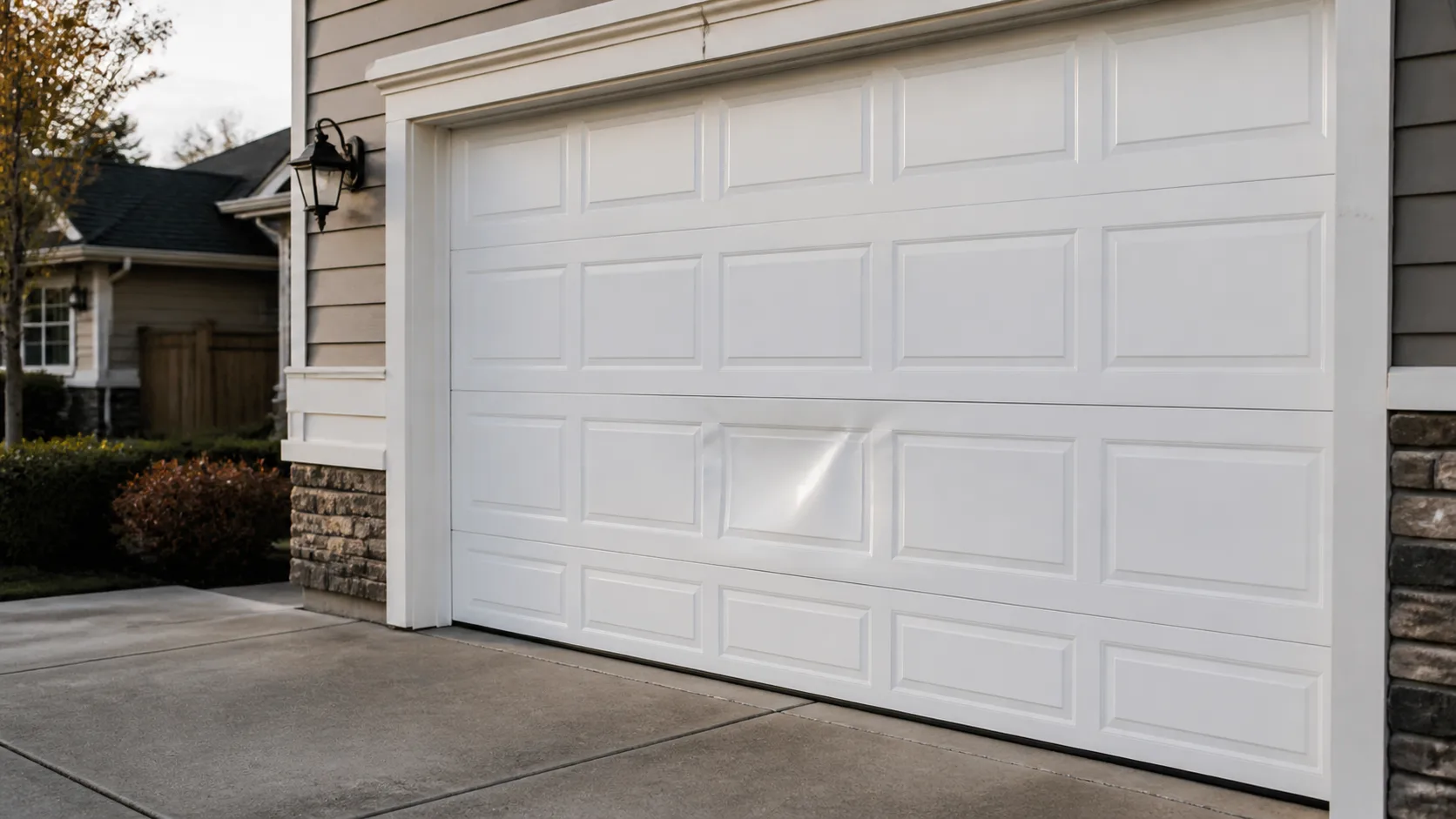
Dealing with a dented or damaged door section? Learn when single garage door panel replacement is a practical option versus full replacement, how manufacturer matching and sun fade affect results, and why bottom panels require professional handling.
A single garage door panel replacement is a practical option when physical damage is confined to one section, the manufacturer still produces matching replacement panels, and the surrounding door structure remains sound. If an accidental vehicle impact or minor collision dents only a lower or middle panel on a newer door, swapping out that solitary section restores both curb appeal and structural strength without the cost of a full door assembly. However, if the door is older, weather-beaten, discontinued, or bent across multiple sections, replacing the complete door is generally the safer and more economical long-term investment.
When Replacing Just One Panel Makes Sense
Modern sectional overhead doors consist of separate horizontal panels connected by hinges and guided along vertical and horizontal tracks. Because of this modular design, a damaged section can often be removed independently. A single garage door panel replacement is typically practical under the following conditions:
- Isolated impact damage: The impact is limited strictly to one section, while the hinges, rollers, and garage door track system remain straight and properly aligned.
- Active model availability: The original door manufacturer still fabricates the exact model, gauge of steel or composite, and interlocking joint profile.
- Minimal weather fading: The existing exterior finish has not suffered years of heavy sun exposure or weather wear, allowing a factory replacement section to match neighboring panels without an obvious color contrast.
- Sound mechanical components: The counterbalance springs, cables, and garage door opener have not suffered secondary strain or mechanical distortion from the collision.
When a Full Door Replacement Is the Smarter Choice
While ordering a single section may seem straightforward, several factors often make a complete door replacement the more sensible and durable route.
Discontinued Sections and Joint Compatibility
Door manufacturers frequently update product lines, modifying tongue-and-groove or shiplap joint profiles over time. If a door model has been discontinued, a newly sourced panel will not interlock cleanly with older sections. Mismatched joints can create gaps that admit drafts, rain, and debris, or cause the door to bind as it travels through the garage door track system.
Weathering and Surface Fading
Exterior finishes naturally fade from exposure to seasonal temperature swings, summer sunlight, and road salt. Even when ordering the exact factory color code from the original manufacturer, a brand-new panel often looks noticeably brighter than the older, weathered sections beside it. While painted wood doors can sometimes be sanded and repainted uniformly, pre-finished steel panels cannot always be blended easily.
Multi-Panel Stress and Frame Misalignment
An impact against a garage door rarely concentrates force in one isolated spot. Energy travels into adjacent hinges, roller stems, and neighboring panels, creating subtle bends or stress cracks near attachment points. When two or more panels are bent, sourcing multiple replacement sections and paying for individual panel labor often approaches the cost of installing a completely new insulated garage door.
High-Tension Hardware and Panel Replacement Safety
Replacing a garage door panel is not a safe do-it-yourself task, particularly when servicing the bottom section. The bottom corners of the door anchor the lift cables, which are held under extreme tension by the counterbalance springs. The U.S. Consumer Product Safety Commission (CPSC) warns homeowners of severe laceration and blunt-force hazards associated with high-tension garage door counterweights and brackets.
Removing a bottom panel requires professional tools and tension-release procedures to ensure cables and springs do not release unexpectedly. Homeowners should never attempt to unbolt bottom brackets, adjust tensioned cables, or force bent panels out of the tracks. Experienced professionals use heavy-duty support equipment to secure the door safely throughout the repair process.
Inspecting Supporting Hardware During Panel Service
Whenever an impact bends or dents a panel, the surrounding operating components require careful inspection before the door runs again:
- Hinges and roller stems: Stamped hinges can twist under sudden force, putting excessive side-load friction on roller stems and bearings.
- The garage door track system: Vertical and horizontal tracks must be inspected for bends, crimps, or loose wall mountings to ensure panels glide smoothly without catching.
- Hardware lubrication: During repairs, moving parts should be properly serviced. Only moving bearings, rollers, and hinges get lubricated—never lubricate the inside of the track channels, as grease inside the tracks collects dirt and causes rollers to skid rather than spin freely.
Professional Garage Door Repair and Panel Evaluation
If you need to fix garage door damage after an accidental bump, an on-site evaluation confirms whether an individual panel swap is feasible or whether a full replacement is recommended. When you need to fix a broken garage door, experienced professionals can verify manufacturer specifications and check every mechanical component for safe operation.
For homeowners across Eastern Massachusetts, Prime Garage Doors offers same-day service available and 24/7 phone support. Whether you need prompt garage door repair boston service or scheduled garage door repair framingham ma technicians, our team provides straight answers before any work begins. Property owners in other areas researching saratoga springs garage door repair options face the same core considerations: verify panel availability, inspect the garage door track system thoroughly, and rely on qualified technicians whenever high-tension hardware is involved.
Summary
A single garage door panel replacement offers an effective repair when physical damage is strictly limited to one section of an active, unfaded door model. However, older systems, discontinued joint profiles, weathered finishes, and multiple bent sections usually make a full door replacement the safer and more economical long-term solution.
- Single panel swaps work best when identical matching sections are still actively manufactured.
- Bottom panels are attached to dangerous high-tension cables and should only be serviced by professionals.
- Supporting hardware, including hinges, rollers, and the garage door track system, must be inspected for hidden alignment damage.
- Proper garage door track maintenance requires lubricating moving bearings, rollers, and hinges, while keeping track channels clean and free of grease.
If your garage door panel is dented or cracked, contact Prime Garage Doors at (844) 321-0914 to schedule an evaluation. Call Now or Request a Free Estimate to restore your door safely.
Frequently asked
- Can you replace just one panel on an older garage door?
- Replacing a single panel on an older garage door is often difficult because manufacturers frequently update interlocking joint styles, paint formulations, or discontinue legacy models altogether. Even if a compatible section is located, years of sun fading and outdoor weathering usually create a noticeable visual mismatch against the surrounding sections. In most cases where an older door is damaged, installing a complete replacement door provides a more dependable and cohesive solution.
- Is it safe to replace a damaged bottom garage door panel myself?
- Replacing a bottom panel is not safe for homeowners because the bottom corner brackets anchor the lift cables connected to high-tension counterbalance springs. Tampering with or loosening these brackets without professional containment tools can release extreme mechanical force, presenting severe blunt-force hazards. Experienced professionals should always manage bottom section swaps to keep the door's weight supported safely.
- How do I know if the garage door track system was damaged when the panel was hit?
- An impact strong enough to crease a panel often pushes force outward into the hinges, roller stems, and vertical tracks. If the door shudders during travel, produces grinding noises, or shows visible bends along the garage door track system, structural alignment has been compromised. Operating the door with twisted tracks will strain the motor and can cause rollers to bind or derail.
- Will a newly installed replacement panel match the color of my existing door?
- A replacement panel ordered from the original manufacturer will match the factory color code, but natural exposure to sunlight and seasonal weather alters older finishes over time. On painted wood doors, repainting the entire exterior easily restores uniform color, but pre-finished factory steel may show a noticeable contrast. Scheduling an evaluation allows a technician to assess whether a single panel will blend cleanly.
- What should I do if more than one garage door panel is damaged?
- When multiple panels are dented or cracked, the structural rigidity of the entire door is generally compromised. Ordering several individual sections and rebuilding the door requires extensive labor that often approaches the cost of a complete new door installation. Requesting a free estimate from experienced professionals helps determine whether repairing multiple sections or installing a brand-new door is the more practical path.