Garage Door Repair
Job storyRight Away Garage Door Solutions | Emergency Repair & Service
August 27, 2026 · Prime Garage Doors
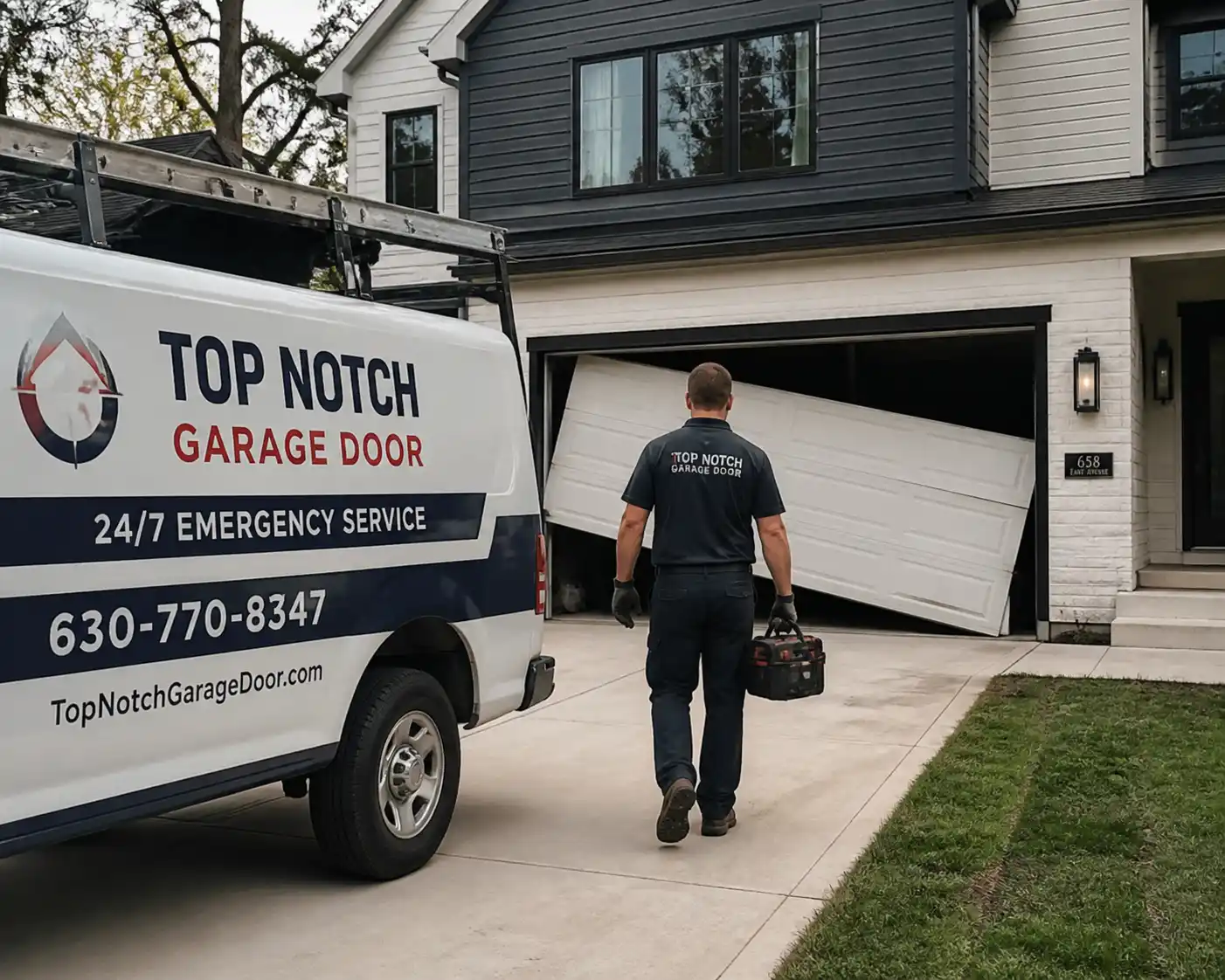
Stuck overhead door or broken spring? Get fast, reliable, and professional emergency help from Right Away Garage Door Solutions. Same-day repairs available 24/7.
When your garage door breaks unexpectedly, finding right away garage door solutions becomes an important priority for protecting your property, maintaining access to your vehicle, and avoiding unnecessary damage. A broken torsion spring, damaged lift cable, off-track door, or malfunctioning opener can prevent normal operation and create safety concerns that should not be ignored.
Garage doors are complex systems made up of springs, cables, drums, rollers, tracks, hinges, brackets, safety sensors, and automatic openers. These components work together to support the weight of the door and control its movement. When one part fails, continuing to operate the door can place additional stress on other components.
For homeowners and businesses throughout Greater Boston, the safest approach is to stop using a visibly damaged door, keep people away from the affected area, and arrange an inspection by a qualified garage door professional. A proper diagnosis can determine whether the problem involves a spring, cable, track, roller, opener, or another component.
Common Problems Requiring Right Away Garage Door Solutions
Some garage door problems can be addressed during routine maintenance, while others require prompt professional attention. Recognizing the difference can help prevent a small mechanical issue from becoming a more complicated repair.
Broken Torsion or Extension Springs
Garage door springs counterbalance much of the door's weight, allowing the door to be lifted manually or by an automatic opener. Torsion springs are generally mounted above the door opening, while extension springs are positioned alongside the horizontal tracks on applicable systems.
When a spring breaks, homeowners may hear a loud popping or snapping sound. The door can suddenly become much heavier, remain closed, or become difficult to lift manually.
A broken spring does not necessarily mean the opener has failed. In many situations, the opener is unable to lift the door because the spring system is no longer providing the required counterbalance.
Homeowners should not attempt to wind, unwind, remove, or replace a torsion spring themselves. These components store significant mechanical energy and require appropriate tools and procedures.
For more information, see our guide to garage door spring repair.
Snapped, Frayed, or Displaced Lift Cables
Lift cables work with the spring system to transfer lifting force to the garage door. With repeated use, cables can experience wear, corrosion, or damage. A cable may also become displaced from its drum when another mechanical problem causes the door to become unbalanced.
Signs of a cable problem can include:
One side of the door sitting lower than the other
A visibly loose or frayed cable
A door that moves unevenly
A cable hanging away from the drum
Difficulty opening or closing the door
Moisture and environmental exposure can contribute to corrosion, but they are not necessarily the sole cause of cable failure. Age, repeated cycles, mechanical wear, improper alignment, and other component failures can also contribute.
A displaced cable should not simply be forced back into position. The complete lifting system should be inspected to determine why the cable came loose.
Off-Track or Misaligned Garage Doors
A garage door can come off its tracks when a roller leaves the track, a track becomes bent or displaced, an obstruction interferes with movement, or another component causes the door to become uneven.
An off-track door may appear crooked or tilted. One side may be higher than the other, and the door may stop moving normally.
Trying to force an off-track door open or closed can potentially damage:
Door sections
Rollers
Tracks
Hinges
Cables
Brackets
The automatic opener
If the door is visibly off its tracks or hanging unevenly, keep people and vehicles away from the area and arrange professional assistance.
Garage Door Opener and Electrical Problems
Not every garage door failure is caused by springs or other mechanical components. The automatic opener can also develop electrical or mechanical problems.
Potential causes include:
A disconnected power supply
A depleted remote-control battery
Misaligned safety sensors
An obstruction in the door's path
A broken spring
Excessive resistance from the door
Worn opener gears
Incorrect travel settings
Control-board or electrical problems
LiftMaster identifies several conditions that can interfere with opener operation, including obstructions, track alignment, safety sensors, lubrication, and broken springs. (liftmaster.com)
If your remote is not communicating correctly with the opener, our LiftMaster 890MAX programming guide provides additional information. However, programming will not correct an underlying mechanical failure such as a broken spring or off-track door.
Why Prompt Professional Repair Matters
When a garage door stops working, continuing to operate it can sometimes increase the damage. Professional right away garage door solutions focus first on determining the cause of the problem and making sure the system can be safely serviced.
High-Tension Spring and Cable Hazards
Garage door springs store mechanical energy, while cables, drums, brackets, and related hardware can experience substantial forces during operation.
The U.S. Consumer Product Safety Commission provides safety guidance for garage door systems and recommends professional attention for certain mechanical problems, including doors that are not properly balanced or that bind during operation. (cpsc.gov)
Homeowners should not attempt to:
Wind or unwind torsion springs
Remove spring assemblies
Cut or replace cables under tension
Adjust cable drums without proper equipment
Remove bottom brackets
Force an off-track door back into its tracks
Improper handling can result in serious injury or additional property damage.
Preventing Secondary Damage
A garage door opener is designed to move a properly functioning and appropriately balanced door. If the spring system has failed or the door is binding, repeatedly activating the opener may put unnecessary stress on the motor, drive system, tracks, and other hardware.
Stopping operation when a serious mechanical problem becomes apparent can help limit secondary damage.
Protecting Home Security and Access
A garage door that will not close can leave vehicles, equipment, and other belongings exposed. For attached garages, the garage may also provide direct access to the interior of the home.
Prompt professional service can help restore normal operation and allow the property to be secured again.
What to Do While Waiting for Service
If your garage door fails unexpectedly, a few basic precautions can help reduce risk while waiting for professional assistance.
Stop Operating a Damaged Door
If the door is crooked, off-track, unusually heavy, or producing severe mechanical noises, stop using the automatic opener.
Do not repeatedly press the wall button or remote to force the door to move.
Keep People Away From the Door
Keep children, pets, and other people away from a damaged or partially open garage door.
Do not stand beneath a door that appears unstable or is being held open by an uncertain mechanical system.
Avoid High-Tension Components
Do not touch or attempt to adjust broken springs, cable drums, cables, bottom brackets, or other high-tension components.
A component that appears simple to adjust may be storing significant mechanical energy.
Do Not Bypass Safety Sensors
If an opener refuses to close because of a safety-sensor problem, do not bypass the sensors simply to make the door operate.
Residential garage door operators are subject to federal requirements concerning entrapment protection, and the CPSC provides information about these requirements. (cpsc.gov)
Understanding Garage Door Problems During New England Weather
Greater Boston experiences freezing temperatures, snow, rain, humidity, and significant seasonal changes. These environmental conditions can affect garage door components and operating conditions.
Moisture can contribute to corrosion, while freezing conditions can affect lubrication and create ice or snow obstructions. However, it is not accurate to assume that cold weather alone caused a specific spring or cable to fail.
Garage door springs are wear components that undergo repeated cycles. Their service life can depend on factors such as spring design, door weight, usage frequency, installation, and environmental conditions.
For this reason, a professional diagnosis should identify the actual cause of a failure rather than automatically attributing it to temperature.
Professional Garage Door Diagnosis
A reliable garage door repair should begin with diagnosis rather than immediately replacing the most visible damaged component.
For example, if a lift cable has come off its drum, the technician should determine whether the cable itself is damaged or whether another issue caused it to become displaced.
Similarly, an opener that cannot lift a door may be functioning normally while the real problem is a broken or improperly functioning spring.
A professional inspection may include:
Examining the overall condition of the door.
Inspecting spring assemblies.
Checking lift cables and drums.
Inspecting tracks and rollers.
Checking hinges and brackets.
Evaluating door balance.
Examining the automatic opener.
Checking safety sensors.
Testing door movement when safe to do so.
Explaining the recommended repair before work begins.
This process helps identify the underlying problem and reduces the risk of replacing components unnecessarily.
Right Away Garage Door Solutions for Residential and Commercial Properties
Emergency garage door problems can affect both residential and commercial properties.
For homeowners, a failed door can prevent vehicle access or leave the garage unsecured.
For businesses, a damaged commercial garage door can interfere with deliveries, vehicle access, loading operations, or daily business activities.
Commercial doors may use different hardware, operating systems, and configurations from residential garage doors. A professional should evaluate the door's construction, size, usage frequency, springs, tracks, opener, and safety equipment before recommending a repair.
Regardless of the property type, the objective should be safe and reliable operation rather than a temporary fix that only makes the door move for a short period.
Garage Door Services Throughout Greater Boston
Prime Garage Doors is presented as providing garage door services throughout Greater Boston, including communities such as Boston, Cambridge, Newton, Somerville, Quincy, Brookline, Medford, Malden, Waltham, Arlington, Belmont, Dedham, and Needham.
When requesting service, customers should confirm that the provider services their particular location and property type.
It is also important to verify the estimated arrival time, service charges, parts being recommended, warranty terms, and identity of the technician before authorizing work.
How to Choose a Garage Door Repair Professional
When searching for right away garage door solutions, speed is important, but it should not be the only consideration.
Before approving a repair, homeowners can ask:
What caused the garage door problem?
Which component has failed?
Does the replacement part match the door's specifications?
What is included in the quoted price?
Is labor covered by a warranty?
Are replacement parts covered by a warranty?
Who will perform the repair?
Does the technician have appropriate insurance?
Will the door be tested after the repair?
Clear answers can help homeowners make an informed decision and avoid unnecessary repairs.
Service Availability and Contact Information
Service availability should always be confirmed directly before making an appointment. Claims concerning same-day appointments, 24/7 support, free estimates, service areas, or specific response times should only be published when they are currently verified by the provider.
The phone number (844) 321-0914 is currently published by GarageDoorsNetwork, which describes itself as a connection platform that connects homeowners with independent technicians rather than directly performing garage door repairs. The platform also advises customers to verify the qualifications, credentials, and insurance of the technician they work with. (garagedoorsnetwork.com)
For that reason, the number should not be described as a direct Prime Garage Doors technician number unless Prime Garage Doors has independently confirmed that relationship.
This distinction is important because accurate business information helps homeowners understand whether they are contacting a repair company directly or being connected with an independent service provider.
Preventive Garage Door Maintenance
While not every emergency can be prevented, homeowners can pay attention to warning signs that indicate a garage door may require inspection.
These signs include:
New grinding or scraping sounds
Loud popping or snapping noises
Increasing resistance during operation
Uneven movement
A visibly damaged spring
Frayed or loose cables
Worn rollers
Bent or displaced tracks
An opener that struggles to lift the door
Unexpected reversing
Misaligned or obstructed safety sensors
These symptoms do not identify the exact cause on their own. Instead, they indicate that the system should be evaluated.
Routine professional maintenance can also help identify worn hardware before a component failure becomes an emergency.
The CPSC recommends checking that a garage door remains balanced and that its hardware and fittings keep the door properly on track. (cpsc.gov)
Key Takeaways for Emergency Garage Door Problems
When a garage door suddenly fails, the priority should be safety, diagnosis, and restoring secure access.
The most important points are:
Broken springs can make a garage door extremely heavy and difficult to operate.
Damaged or displaced cables can cause uneven door movement.
Off-track doors should not be forced open or closed.
Opener problems may be mechanical, electrical, or related to safety sensors.
High-tension springs and cables should not be repaired without appropriate training and equipment.
Weather can contribute to environmental stress, but the exact cause of a failure should be professionally diagnosed.
Safety sensors should never be bypassed.
Service availability, pricing, warranties, and technician credentials should be confirmed before work begins.
If your garage door is stuck, crooked, off-track, or affected by a broken spring or cable, avoid unnecessary risks and arrange professional assistance. The goal of right away garage door solutions should not simply be getting the door moving again. A proper repair should identify the underlying problem, use appropriately rated replacement components, and verify that the door operates safely and reliably afterward.
For homeowners and businesses throughout Greater Boston, professional garage door diagnosis can help address spring failures, cable problems, track issues, roller wear, opener malfunctions, and other common garage door emergencies while keeping safety at the center of the repair process.
Frequently asked
- What should I do if my garage door spring breaks unexpectedly?
- If your torsion or extension spring breaks, stop using the door immediately and do not attempt to operate the opener. Garage door springs store high mechanical tension and can cause severe injury if handled without proper training and equipment. Call Now to speak with Prime Garage Doors for same-day service available across Greater Boston.
- Can I manually open my garage door if it is off track?
- You should never try to force or manually pull an off-track garage door. Forcing a crooked door can bend the metal tracks, snap lift cables, or permanently damage the door sections. Request a Free Estimate from Prime Garage Doors, where our experienced professionals can safely realign your system.
- Why does my garage door opener motor run, but the door will not move?
- When the motor runs without moving the door, the cause is frequently a broken spring, a snapped cable, or a disengaged emergency release carriage. Because the opener cannot safely lift an unbalanced door, running it repeatedly can burn out the motor gears. Contact our team for 24/7 phone support at (844) 321-0914 to Schedule Service right away.
- How does cold New England weather affect my garage door?
- Freezing temperatures in Greater Boston can harden track lubricants, contract metal springs, and cause components under stress to fail. Moisture from rain and snow can also lead to cable corrosion or freeze bottom rubber seals directly to the ground. If your door binds or fails during a cold snap, Call Now for prompt professional assistance.
- Does Prime Garage Doors offer urgent or same-day repair services?
- Yes, same-day service is available for urgent repairs like broken springs, snapped cables, and off-track doors throughout Greater Boston. We offer free estimates before any work begins and maintain 24/7 phone support at (844) 321-0914. Request a Free Estimate today to have an experienced professional safely inspect your garage door.