
Maintenance
Emergency Garage Door Cable Repair Lowell : Signs & Solutions
September 17, 2026 · Prime Garage Doors
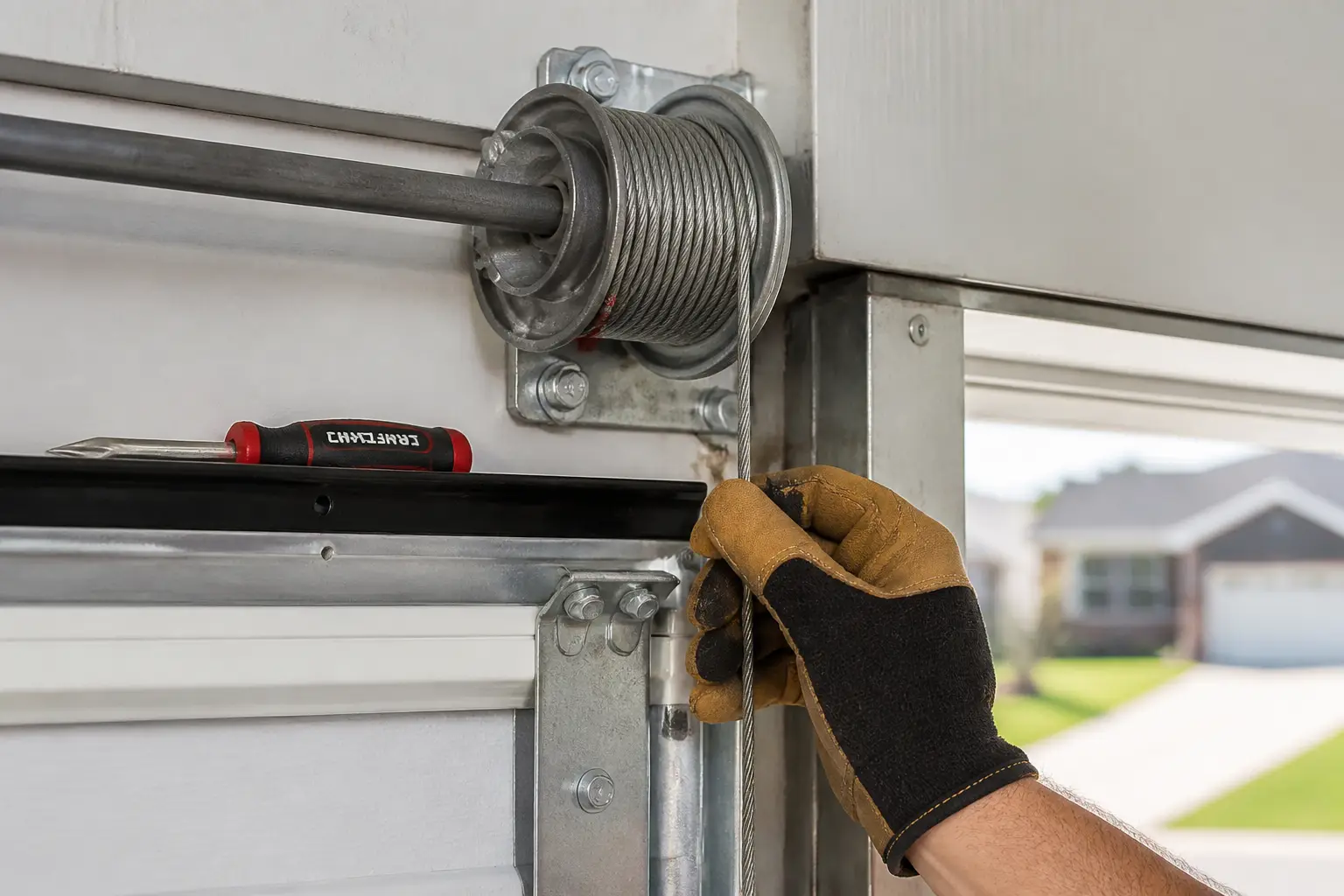
Is your garage door hanging crookedly or stuck? Discover the warning signs of a snapped cable, learn how to handle a garage door cable repair in Lowell safely, and why you should avoid a DIY fix.
Emergency Garage Door Cable Repair in Lowell: Signs, Risks, and Solutions
Garage door cables are essential load-bearing components that work alongside high-tension springs to lift and lower heavy garage door panels smoothly. Made from tightly wound aircraft-grade galvanized steel, these cables endure continuous physical stress during every cycle. When a cable frays, slips off its drum, or snaps completely, the door immediately loses balance. This can cause the door to hang at a dangerous angle, jam tightly within the steel tracks, or crash down unexpectedly. Dealing with a malfunctioning cable in Lowell requires prompt action to prevent property damage and severe personal injury. If you are experiencing structural issues or an overhead door that refuses to move, learning how to recognize cable failure—and calling experienced professionals to fix a broken garage door—is critical to restoring safe, reliable operation.
Understanding How Garage Door Cables Function
To understand why cable failure causes such immediate operational disruption, it helps to understand how overhead garage door counter-balance systems operate. Garage doors rely on a system of springs, drums, and cables to transfer force and offset the door’s weight.
Torsion Spring Cable Systems
In a torsion spring configuration, springs are mounted on a heavy metal shaft anchored directly above the door opening. Cable drums are attached to both ends of this shaft. High-strength steel cables attach to bottom brackets on the lowest door panel, run vertically up the sides of the door, and wrap around the grooved drums. As the spring turns, it rotates the drums, which wind up the cables to pull the door upward evenly along the garage door track system. Because the torsion system remains under constant heavy tension, the cables bear a immense physical load whenever the door is resting, opening, or closing. If your system shows wear, seeking professional garage door cable repair ensures hardware is replaced safely under balanced spring pressure.
Extension Spring Cable Systems
In an extension spring setup, springs run horizontally along the upper side tracks. Cables attach to the bottom door brackets, travel over pulleys mounted near the front and rear of the horizontal tracks, and connect back to the spring assembly. Extension systems also utilize safety cables running through the center of the springs. These safety cables prevent broken springs from flying across the garage if a coil snaps. However, the operating cables carry the weight of the door during motion, making them just as susceptible to mechanical friction and eventual wear.
Common Warning Signs of Impending Cable Failure
Garage door cables rarely snap without warning. Heavy steel strands typically degrade progressively over months of friction, humidity exposure, and mechanical load. Inspecting your door system regularly allows you to spot minor wear before a total system collapse occurs. Watch for these primary red flags:
The Door Hangs Crooked or Off-Level: If a cable stretches excessively, slips out of its drum grooves, or breaks on one side, the remaining cable attempts to lift the door alone. This pulls one side higher than the other, wedging the door diagonally across the opening and binding the rollers within the garage door track system.
Visible Strands, Fraying, or Rust: Over time, individual steel wires within the cable can break, producing tiny metal splinters or jagged edges. Rust accumulation along the bottom brackets or lower portions of the cable compromises structural integrity and indicates severe internal weakness.
Excessive Slack or Loose Cable Loops: When the door is fully closed, cables should remain taut against the side frames. If you notice dangling loops or visible slack near the cable drums, the tension has drifted out of balance, putting the system at immediate risk of jumping off the track.
Slapping, Squeaking, or Grinding Sounds: A loose or misaligned cable often rubs against steel brackets or the track edges as the door travels upward. This generates distinct slapping or metal-on-metal squeaking noises during motor operation.
Rapid Dropping or Jerky Movement: If your garage door stutters during opening or closes abruptly during the final foot of travel, worn cables may be slipping across the drums rather than winding smoothly.
Why Garage Door Cables Fail in Lowell and Greater Boston
Homeowners in Lowell and surrounding Middlesex County communities face specific environmental and mechanical challenges that accelerate hardware wear on residential overhead doors. In many cases, cable degradation goes hand in hand with spring tension loss; understanding why garage door springs break helps homeowners identify multi-component issues early.
Harsh New England Winter Conditions and Salt Corrosion
Cold snaps, heavy snowfall, and high humidity create a severe environment for metal door components. Road salt and slush tracked inside the garage melt onto concrete floors, evaporating and creating a saline environment. Because garage door cables connect to bottom corner brackets located near ground level, they are frequently soaked in moisture and salt residue. This accelerates surface oxidation, leading to internal rust, wire binding, and eventual snapping.
Seized Rollers and Misaligned Garage Door Track System
If steel or nylon rollers seize due to lack of lubrication or debris accumulation, they stop rolling and drag along the tracks. This drastically increases mechanical friction across the whole system. The cables must pull against this additional resistance, placing immense strain on individual steel strands until the cable stretches or snaps under the overload.
Impact Damage and Cable Drum Slippage
Accidental impacts—such as backing a vehicle into a partially open door or hitting a bottom panel with equipment—can dislodge rollers from the garage door track system. When a roller leaves the channel, the tension on the cables drops instantaneously on one side. The sudden slack causes the cable to jump out of the drum grooves, wrapping around the center shaft or binding tightly against the header wall.
Natural Metal Fatigue and Wear
Even properly aligned garage doors experience metal fatigue over years of daily operation. The constant winding and unwinding around aluminum cable drums bends the internal steel wires millions of times over their operating lifespan, eventually causing individual fibers to fracture.
High-Tension Hardware Safety and Standards
The total weight of a residential overhead garage door can exceed several hundred pounds. All of this weight is counterbalanced by high-tension springs and steel cables under extreme kinetic force. Working on high-tension garage hardware without specialized tools, proper training, and strict safety procedures creates a high risk of violent component release, property destruction, and severe personal injury.
Safety organizations, including the U.S. Consumer Product Safety Commission (CPSC), emphasize the extreme hazards associated with high-tension overhead door hardware. Attempting to unbolt bottom corner brackets, unwind torsion springs with makeshift tools, or cut frayed cables can cause components to snap violently. Never attempt to untangle, cut, or adjust cables that are actively under spring tension.
What to Expect During Professional Garage Door Cable Replacement
When an experienced technician addresses a broken or frayed cable in Lowell, they follow a rigorous step-by-step protocol to restore balance, safety, and smooth mechanical operation across the whole system.
1. Total Tension Containment and System Securing
Before touching hardware, technicians secure the door in place using industrial locking clamps. They carefully safely release tension from the torsion or extension springs using commercial winding equipment, ensuring the system cannot move unexpectedly while hardware is being removed.
2. Hardware Inspection and Paired Replacement
Technicians check bottom brackets, roller shafts, pulleys, and aluminum drums for wear, gouges, or structural bending. Even if only one cable has completely snapped, experienced professionals always replace both cables simultaneously. Replacing cables in matching pairs ensures uniform diameter, equal tension capability, and identical stretch characteristics, preventing future uneven lifting.
3. Proper Drum Winding and Cable Setting
New aircraft-grade cables are attached to heavy-duty bottom brackets and routed vertically to the overhead drums. The technician feeds the cable precisely into the spiral drum grooves, ensuring correct seating without cross-threading or overlapping loops that could cause binding.
4. Re-tensioning and System Calibration
With cables seated, spring tension is meticulously re-applied and calibrated to balance the exact physical weight of the door panels. Technicians ensure equal tension on both sides so the door sits perfectly level within the door frame.
5. Garage Door Track System Realignment and Lubrication
The technician cleans and inspects the vertical and horizontal channels of the garage door track system to ensure true parallel alignment. All moving bearings, steel rollers, and panel hinges receive dedicated silicone or lithium-based lubrication. Technicians never apply grease or oil to the inside of the track channels, as liquid lubricants collect dust, grit, and road salt that accelerate friction and jam rollers.
Regional Service for Greater Boston and Beyond
Overhead door issues affect properties throughout eastern Massachusetts and surrounding regions. Whether you need immediate support in Lowell or require garage door repair boston, expert assistance is essential when high-tension components fail. Homeowners seeking reliable regional service can depend on comprehensive solutions tailored to local architectural styles and weather conditions, including dedicated support for garage door repair framingham ma as well as specialized resources like our guide to saratoga springs garage door repair for regional properties.
Prime Garage Doors delivers fast response, free estimates, and experienced technicians across Greater Boston—including Cambridge, Somerville, Newton, Quincy, Brookline, Watertown, Medford, Malden, Waltham, Arlington, and Belmont. Our team carries heavy-duty replacement cables, premium steel and nylon rollers, high-cycle torsion springs, and original manufacturer replacement parts to resolve emergency door failures during a single visit.
Essential Preventative Maintenance Tips
While broken cables require professional replacement, homeowners can extend the lifespan of their overhead door hardware by adopting simple visual maintenance practices:
Perform Monthly Visual Inspections: Stand inside your garage with the door fully closed and inspect the bottom several feet of steel cable on both sides. Look for rust flaking, crushed sections, or tiny frayed wire strands.
Keep Bottom Brackets Clean and Dry: Sweep away salt accumulation, snow melt, and autumn leaves near the bottom door seal to reduce corrosive exposure around lower cable anchors.
Lubricate Moving Hardware Correctly: Apply high-grade garage door lubricant to roller stem bearings, panel hinges, and spring coils twice per year. Keep track interiors clean and dry—never coat track channels with grease.
Schedule Professional Inspections: Have an experienced garage door professional inspect hardware balance, spring tension, cable drum alignment, and safety reversing features annually.
Summary and Key Takeaways
Garage door cables are high-tension components vital to the safe, balanced operation of your overhead door system. In Lowell and across Greater Boston, harsh winter weather, road salt corrosion, and mechanical wear can cause steel cables to fray, slip off their drums, or break unexpectedly. Recognizing early warnings like crooked doors, loose cable loops, and noisy travel allows you to take action before structural damage occurs. Because cables operate under severe kinetic tension, repairs should always be handled by trained technicians using proper tensioning procedures.
Broken or off-drum cables cause severe binding, off-level door alignment, and potential panel falls.
Always replace cables in matching pairs to maintain uniform lift tension and straight door travel.
Lubricate moving roller bearings and panel hinges, but never apply grease or oil inside track channels.
Never attempt DIY repairs on cables, bottom brackets, or torsion springs due to severe high-tension safety hazards.
If your overhead door is stuck, hanging off-level, or showing frayed steel cables, contact Prime Garage Doors immediately. Our team provides 24/7 phone support, same-day service availability, and free estimates across Lowell and Greater Boston. Request a Free Estimate or Call Now at (844) 321-0914 to speak with an experienced technician today.
Frequently asked
- Can I safely open my garage door if a cable is frayed or broken?
- No, you should never attempt to operate an overhead door with a damaged or snapped cable. Operating the door under uneven spring tension can cause the panels to derail, fall unexpectedly, or severely damage the garage door track system. Contact Prime Garage Doors at (844) 321-0914 to schedule service with experienced professionals.
- Why do garage door cables break more frequently during New England winters?
- Cold weather, road salt, and winter slush tracked into garages across Lowell create a highly corrosive environment near the bottom brackets. Over time, salt residue and moisture cause galvanized steel strands to oxidize, weaken, and snap under severe mechanical tension. Having an experienced technician inspect hardware regularly prevents sudden snapping during cold snaps.
- Should both garage door cables be replaced if only one snaps?
- Yes, experienced garage door technicians always replace high-tension lift cables in matching pairs. Because both cables endure identical daily tension and cycles, replacing only one creates uneven stretching and leads to unbalanced door travel. Installing matching cables ensures uniform lifting strength and proper alignment.
- How long does professional garage door cable replacement take?
- A trained technician can typically complete high-tension cable replacement and system re-balancing in one to two hours. Prime Garage Doors offers free estimates, 24/7 phone support, and same-day service availability throughout Greater Boston. Call (844) 321-0914 today to Request a Free Estimate or Schedule Service.
- How can I protect my garage door cables from early mechanical failure?
- Keep the lower garage floor clean of road salt and debris, and visually inspect the bottom sections of cable regularly for frayed strands or dangling slack. Make sure moving bearings, rollers, and hinges are lubricated periodically, but never apply grease or liquid lubricants inside the garage door track system channels. If you spot wear or tension issues, call an experienced professional right away.