
Garage Door Repair
Commercial Garage Door Repair: A Downtime and Access Planning Guide
November 20, 2026 · Prime Garage Doors
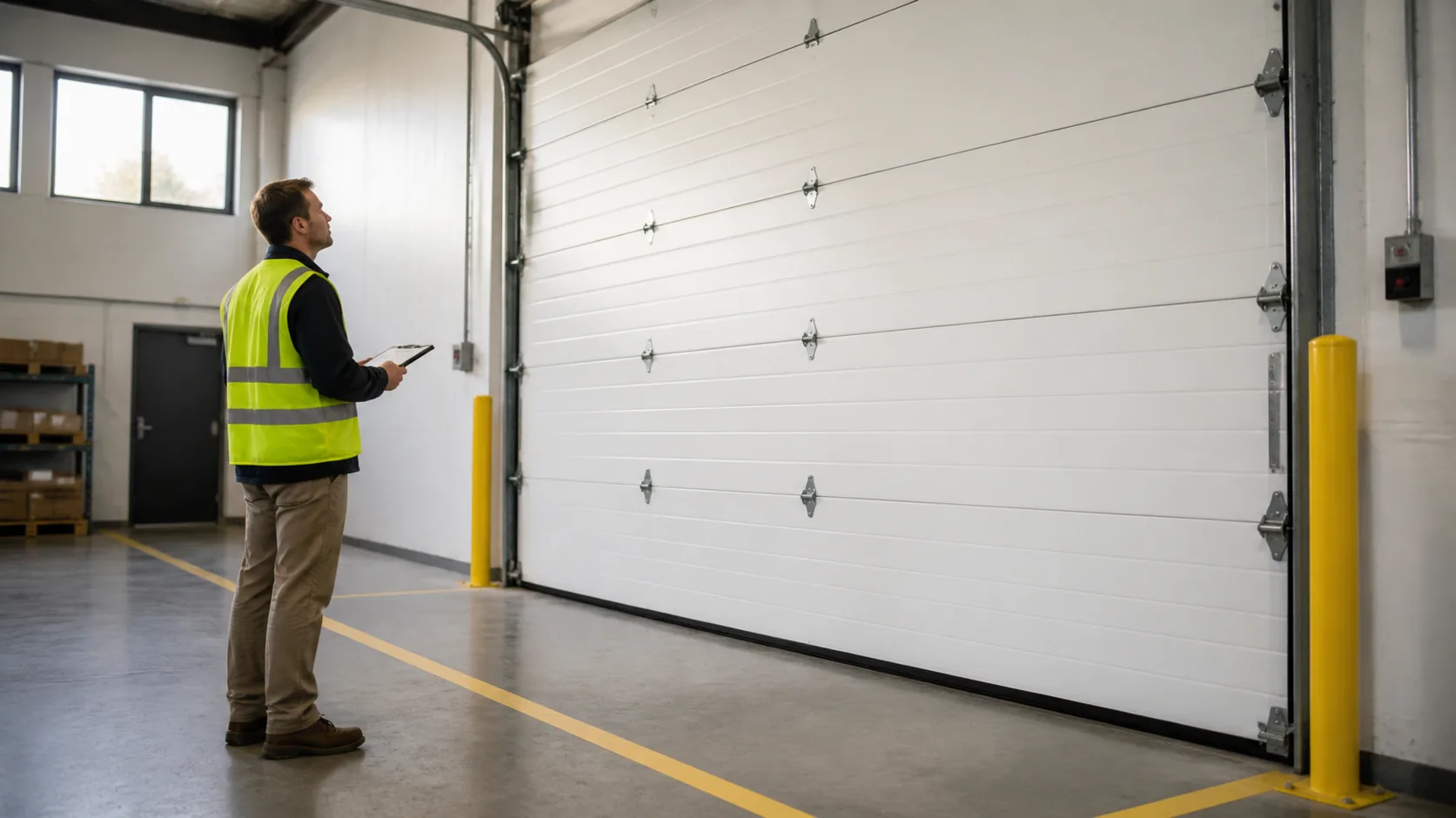
Dealing with a broken business door? Follow this commercial garage door repair guide to document issues safely, manage staff and delivery access during downtime, and prepare for a professional service visit.
Commercial garage door repair requires immediate access planning and prompt mechanical attention to prevent shipping delays, security risks, and operational bottlenecks. When an overhead door fails, jams, or throws a cable, facility managers must secure the entrance, redirect fleet traffic, and bring in experienced professionals to handle high-tension components safely. Rapid triage keeps small businesses, distribution warehouses, and multi-family parking facilities functioning smoothly during unexpected hardware breakdowns.
Understanding Commercial Overhead Door Failures
Unlike standard residential garage doors that operate a few times each day, commercial doors run through dozens or hundreds of cycles every week. Delivery trucks, forklifts, and commercial fleet traffic put continuous physical demands on every mechanical component. When these heavy assemblies fail, the issue typically stems from normal cycle wear, structural impact, or regional environmental stress.
Commercial torsion springs and heavy-duty lift cables manage tremendous mechanical loads. Over continuous cycles, metal fatigue inevitably causes springs to weaken and break, or lift cables to fray and unspool from the drums. New England weather accelerates these failures. Winter cold snaps, road salt brought inside by commercial vehicles, and coastal humidity corrode exposed steel, dry out moving roller bearings, and thicken motor gear lubricants.
Downtime Planning: Managing Facility Access During a Breakdown
A sudden overhead door breakdown creates an immediate operational delay. Whether managing a fleet garage, a light-industrial bay in Watertown, or a commercial storage facility, having a structured plan minimizes disruption while waiting for a service crew.
- Reroute Bay Traffic: Immediately divert delivery vehicles and logistics couriers to alternate loading docks or secondary overhead bays to maintain shipping schedules.
- Secure the Perimeter: If an overhead door is stuck open, establish an internal boundary. Move valuable equipment away from the opening and assign staff to monitor access points.
- Cordon Off the Work Area: Place cones, barriers, or warning tape around the door opening to keep workers, pedestrians, and vehicles at a safe distance from overhead components.
- Cut Motor Power: Shut off electrical power to the commercial door opener at the wall isolator or breaker box to prevent accidental activation from push buttons or wireless transmitters.
Critical Safety Warnings for High-Tension Components
Commercial overhead doors can weigh several hundred pounds, and their counterbalance assemblies store substantial potential energy. Property managers and maintenance teams should never attempt repairs on counterbalance assemblies, bottom roller brackets, or lifting cables. According to the U.S. Consumer Product Safety Commission (CPSC), high-tension garage door springs and lifting components present severe risks of blunt-force trauma and laceration when handled without professional commercial winding tools and safety equipment.
Never allow facility staff to adjust counterbalance springs, loosen cable drums, or force a jammed door down. Because commercial doors lack the lightweight manual balance of small residential units, attempting to force or manually disengage a stuck door can cause the entire curtain to drop uncontrollably. When structural shifting or mechanical failure occurs, standard safety procedure requires contacting an experienced professional equipped for commercial counterbalance repair.
Maintaining the Garage Door Track System and Moving Hardware
A stable path of travel keeps overhead doors moving safely through high-cycle operations. The garage door track system carries the full weight and travel path of the door panels, meaning it must remain straight, plumb, and free of physical damage under heavy daily usage.
Track Cleaning and Maintenance
Industrial bays generate dirt, metal shavings, shipping debris, and road grime that collect inside the steel guide rails. Keep the garage door track system clear by wiping down the interior channels with a clean, dry shop cloth. Never apply grease, oil, or spray lubricants inside the track channels. Sticky residues collect airborne dust and gritty particles, which causes rollers to slide and drag instead of turning smoothly.
Targeted Lubrication of Moving Parts
While track channels must stay dry, moving hardware requires periodic lubrication to resist friction and mechanical wear. Apply non-gumming commercial lubricant or silicone spray directly to:
- Moving ball bearings inside steel rollers (keep spray off nylon roller tires)
- Steel hinge pivot points across panel joints
- Shaft bearing plates installed near the counterbalance assemblies
Professional Solutions for Commercial Door Recovery
When an entrance failure interrupts business, property owners need fast answers and dependable field service. Knowing when to call a professional to fix garage door problems helps businesses resolve issues before they escalate into structural damage or safety hazards.
Professional technicians arrive ready to handle complex commercial torsion setups, damaged section replacements, jackshaft motor repairs, and alignment corrections. Whether your business requires commercial garage door repair Boston facilities depend on, timely garage door repair Framingham MA industrial parks need, or regional support such as Saratoga Springs garage door repair, having same-day service available and 24/7 phone support helps keep commercial operations moving forward.
Preventative Strategies to Eliminate Bay Downtime
Scheduled preventative maintenance helps identify worn parts before they cause an unexpected lockout. Implementing regular inspections allows technicians to catch early signs of cable wear, hinge fractures, and opener motor strain while the door remains operational.
Establish a regular service schedule based on daily traffic volume. High-turnover loading docks benefit from quarterly service visits, while light-commercial properties generally run reliably with semi-annual inspections. Regular visits ensure safety reverse systems, photo eyes, spring balances, and track alignments continue meeting industrial safety standards.
Summary: Keeping Commercial Doors Safe and Operational
An unexpected overhead door breakdown does not have to compromise facility safety or disrupt logistics. By establishing traffic detours, securing the bay, and keeping personnel clear of dangerous high-tension parts, commercial property managers protect both staff and operational schedules.
- Reroute delivery vehicles to secondary bays immediately when a door fails.
- Keep staff away from high-tension springs and lift cables to prevent severe injury.
- Keep the garage door track system clean and dry, lubricating only roller bearings and hinge pivots.
- Schedule routine commercial maintenance to detect component wear before sudden operational shutdowns occur.
When your overhead bay door needs immediate service or mechanical realignment, contact Prime Garage Doors at (844) 321-0914. Call Now or Request a Free Estimate to restore safe, reliable access to your facility.
Frequently asked
- How should a facility manage access immediately after a commercial door failure?
- When a commercial overhead door breaks, immediately reroute delivery vehicles and fleet traffic to alternate bays to maintain operational flow. Secure the entrance area with safety markers or caution tape, and disconnect power to the commercial operator to prevent accidental activation. Property managers should then contact an experienced service crew to safely assess the door and restore bay access.
- Why should facility staff avoid repairing commercial springs and lift cables?
- Commercial counterbalance assemblies and lifting cables support several hundred pounds and remain under extreme mechanical tension. Tampering with or attempting to adjust these high-tension components without professional tools carries severe risks of blunt-force injury or sudden door collapse. Professional technicians have the training and specialized equipment required to handle heavy commercial spring and cable replacements safely.
- How often should commercial garage doors receive professional maintenance?
- High-traffic facilities such as distribution hubs and busy loading bays benefit from quarterly preventative maintenance to manage heavy cycle wear. Properties with moderate daily traffic typically require semi-annual inspections to verify track alignment, hardware security, and operator performance. Routine checkups help identify component wear early, avoiding unexpected shutdowns and costly operational delays.
- What is the proper way to maintain the garage door track system?
- Keep the garage door track system clean by wiping down the interior steel channels with a clean, dry shop cloth to remove road salt, dust, and grime. Never apply grease or spray lubricant inside the track channels, as wet residues attract abrasive grit that causes rollers to drag. Instead, apply targeted lubrication only to moving roller bearings and panel hinge pivot points.
- Does Prime Garage Doors offer urgent assistance for commercial door breakdowns?
- Prime Garage Doors provides 24/7 phone support and same-day service availability to resolve urgent commercial overhead door problems quickly. Technicians handle everything from snapped cables and broken torsion springs to off-track doors and operator malfunctions. Facility managers can Call Now or Request a Free Estimate to restore safe, dependable operation to their loading bays.